I remember the time when President Zain Al Abidine Ben Ali seized power in Tunisia in 1987. I was 15, a young political junkie attending an Arabic school. A Lebanese friend came to me and said his countrymen and women in the south, where Lebanese Shia villages abound, flocked to the Tunisian embassy in Beirut because they were impressed by the name of the new Tunisian president which resembles the name of one of the key historical Shia Muslim figures.
Of course, religious myths had not place in the mind of the new Tunisian strongman. Tunisia is a Muslim country but staunchly non-religious at government level, with an educated population, and known more for its artists and musicians, books and world-class touristic resorts than anything else.
Since its independence in 1956, it was ruled by El Habib Bou Rgeiba, a Tunisian nationalist who turned his country into one of the most modernist Arab nations. In his early years, Iraq's Saddam Hussain was impressed by Bou Rgeiba's reforms and implemented some of them, turning Iraq into a powerhouse for education and learning before the war with Iran destroyed everything.
President Ben-Ali took charge from an ailing Bou Rgeiba in 1987 and ruled ever since.
While culture, theaters, education, sports and arts were encouraged, political dissent was not tolerated. China, for example, has allowed the young Chinese many avenues to release their energy through the Internet and social networking, online and offline, with supervision when necessary. No such room in Tunisia. The ability to adapt to change while protecting national interest is essential. President Ben-Ali was protecting Tunisian stability but failed to adapt to a new economy and society. People can live with a strong government as long as they are busy in making and spending money, which is the core of a healthy economy. Overlooking this dynamic was a mistake that President Ben Ali has paid for yesterday, when he had to escape the country after weeks of demonstrations against corruption and inflation.
An army officer and a former head of Tunisian military intelligence and later in charge of external intelligence, President Ben-Ali was forced out by his own military because of the way he handled protesters, killing around 90 protesters and injuring close to one thousand. The protesters were only against the rise in essential food items and general corruption of the ruling elite.
The military sealed Tunisia's airspace and effectively secured all borders. Some relatives of Sarah Trabolsi, the second wife of the president, were arrested by the military as they tried to board a plane out of the country.
The military did not approve of President Ben-Ali's high-handedness and eased the president out. The people have welcomed the military intervention, and emergency rule is in effect now in the country. The new temporary president Mohamad El Ghanouchi has called on "all sons and daughters of Tunis ... to show national spirit and unity and help our nation pass this difficult stage."
LESSONS FOR PAKISTAN
It is just a guess but two people must be watching the Tunisian news closely: President Asif Ali Zardari and Army chief Gen. Ashfaq Parvez Kayani.
President Ben-Ali's departure is bad news for our president. It shows that such departures are possible after all and no amount of 'revenge democracy' ['democracy is the best revenge' is one of Mr. Zardari's best catchphrases] can prevent such an ending.
The Pakistani ruling elite is not just incompetent. It is ineffective, conducts uncivilized politics, and has almost no vision for the country's past, present or future. What is worse is that the Pakistani ruling elite will not allow any mechanism for new Pakistani faces or talents to emerge. This stagnation is what led to President Ben-Ali's escape.
You can add one more charge in the Pakistani case that does not exist in the Tunisian example: Pakistani politics have splintered along linguistic lines, dividing Pakistanis and enticing them to internal warfare. The country's constitution does not allow our parties to do this but there is no one to stop them.
As for Gen. Kayani, his and his colleagues' worry is simple. They do not want to find themselves in a situation where the military intervenes again in a traditional way and clean the mess, like the Tunisians have done. Pakistan needs to create viable state institutions to run the country. The military realizes the importance of this to avoid a meltdown. But such a meltdown is almost knocking at Pakistan's door. In the face of massive failures of the Pakistani political elite, the military knows it will have to step in eventually.
It is not hard to figure this out. But the million-dollar question is: What to do after an intervention. Traditional-style coups, where the army chief steps in and takes charge, like Pervez Musharraf had done, can no longer work. Whoever is in charge after a meltdown, tough decisions will have to be made to restyle the political system by removing crippling bottlenecks in the constitution and laws and in a manner that would stop political parties from becoming personal and family fiefdoms and allow for a healthy and civilize political growth and practice.
Like Tunisia, Pakistan will have to find indigenous solutions. Lectures and recipes from Washington and London won't help. The Tunisians have clear red lines in this regard. But not in Pakistan, which is a contributing factor to constant instability.

Showing posts with label military. Show all posts
Showing posts with label military. Show all posts
Saturday, January 15, 2011


Wednesday, September 22, 2010
32 Dead Pakistani Schoolchildren Tell You This System Has Failed
This is a story of a cruel, ruthless and heartless Pakistani system that has failed. And no elections any number of times can save it without change.
A mother in northern Pakistan jumped into a river where her five underage kids drowned when the management of a privately-run school sent them off in a crammed bus driven by the school’s gatekeeper, or chowkidar, who drove it off a cliff.
Every once in a while comes a news story that makes your heart stop. And this is one of them.
Pakistan's politicians can spend $11 million on a statue for a dead politician but have no money to spare for public universities paralyzed by lack of funds.
Forget democracy. Our politicians, who run our federal and provincial governments, can't enforce discipline on schools, mostly run like supermarkets by the female relatives of politicians, retired military officers and businessmen.
In the sad story of the mother, from Garhi Dupatta in northern Pakistan, the school management saw it fit to cram 35 to 38 kids in a speeding mini-bus on mountain slopes. The chowkidar was on his cell phone when he plunged into a ravine Tuesday. He and four children survived while 32 precious little lives couldn't make it.
Today there are some 40 families or more in one small area called Garhi Dupatta, probably many of them neighbors, mourning dead children because of a criminally negligent school. Would the owners of that school put their own children on that overcrowded mini-bus?
More importantly, would our civil administrators punish the owners of that school? In China, two owners of a company that made tainted milk powder that killed several Chinese babies were executed without mercy last year after a trial. Will we see the owners of that private Pakistani school even questioned for the life-threatening choices they made for the school kids? Not likely.
Eight months ago, eight school children were run over by a train because the driver of their van decided to take a short cut over a railway line. Did anyone ask school owners whether they supervised the transporters? Did anyone question the area's education officials if they enforced safety guidelines for school buses? Did anyone ask the railway officials if they have safe crossings for school buses?
In fact, the federal railway minister, from ANP, felt nothing wrong in introducing a little bit of humor into the tragedy when he publicly said the train didn't come after the van driver on the street. This was his cute way of absolving his ministry of any responsibility.
Like everything else, school owners have become another money-driven cartel in the country. When time comes for change, all of these cartels that hide behind the facade of democracy will have to be demolished.
Our elite politicians, who consider government to be their class right, have their kids studying in US and UK while the children of ordinary Pakistanis die miserable deaths under different pretexts.
This is why a grand-scale, civil-society-led, and military-backed intervention to scrap a failed Pakistani political system will become necessary, eventually, when the time comes.
And when that time arrives, we will want our military to take a strategic decision to snatch power from the feudal democrats and usher in change with the help of talented and educated Pakistanis from the lower and middle classes.
A mother in northern Pakistan jumped into a river where her five underage kids drowned when the management of a privately-run school sent them off in a crammed bus driven by the school’s gatekeeper, or chowkidar, who drove it off a cliff.
Every once in a while comes a news story that makes your heart stop. And this is one of them.
Pakistan's politicians can spend $11 million on a statue for a dead politician but have no money to spare for public universities paralyzed by lack of funds.
Forget democracy. Our politicians, who run our federal and provincial governments, can't enforce discipline on schools, mostly run like supermarkets by the female relatives of politicians, retired military officers and businessmen.
In the sad story of the mother, from Garhi Dupatta in northern Pakistan, the school management saw it fit to cram 35 to 38 kids in a speeding mini-bus on mountain slopes. The chowkidar was on his cell phone when he plunged into a ravine Tuesday. He and four children survived while 32 precious little lives couldn't make it.
Today there are some 40 families or more in one small area called Garhi Dupatta, probably many of them neighbors, mourning dead children because of a criminally negligent school. Would the owners of that school put their own children on that overcrowded mini-bus?
More importantly, would our civil administrators punish the owners of that school? In China, two owners of a company that made tainted milk powder that killed several Chinese babies were executed without mercy last year after a trial. Will we see the owners of that private Pakistani school even questioned for the life-threatening choices they made for the school kids? Not likely.
Eight months ago, eight school children were run over by a train because the driver of their van decided to take a short cut over a railway line. Did anyone ask school owners whether they supervised the transporters? Did anyone question the area's education officials if they enforced safety guidelines for school buses? Did anyone ask the railway officials if they have safe crossings for school buses?
In fact, the federal railway minister, from ANP, felt nothing wrong in introducing a little bit of humor into the tragedy when he publicly said the train didn't come after the van driver on the street. This was his cute way of absolving his ministry of any responsibility.
Like everything else, school owners have become another money-driven cartel in the country. When time comes for change, all of these cartels that hide behind the facade of democracy will have to be demolished.
Our elite politicians, who consider government to be their class right, have their kids studying in US and UK while the children of ordinary Pakistanis die miserable deaths under different pretexts.
This is why a grand-scale, civil-society-led, and military-backed intervention to scrap a failed Pakistani political system will become necessary, eventually, when the time comes.
And when that time arrives, we will want our military to take a strategic decision to snatch power from the feudal democrats and usher in change with the help of talented and educated Pakistanis from the lower and middle classes.
Monday, August 30, 2010
Saturday, August 14, 2010
Sunday, August 1, 2010
ISI Tops 10 Best Intelligence Agencies In The World

SmashingLists.com calls it ‘least funded, yet the strongest’
Topping the Top Ten? “ISI for sure,’ says Gren, “No double agents, no agent ever caught on camera, the lowest budget but still affective. In war with 6 big intelligence agencies of the world. ISI has even countered MOSSAD in the 1980s and late ‘90s when there was a plan of a possible strike on Pakistan’s nukes.”
“It has to be the ISI” says John Smith on the Web site. “It broke down the Soviet Union (which also led to the reunification of Germany; the German Intelligence Chief gave a piece of the Berlin Wall to the Pakistani Intel Chief with a plaque under it saying, ‘To the one who struck the first blow’), has protected and developed the country’s nuclear assets against all odds, has defeated Al Qaeda/Taliban especially these days with the capture of Baradar, etc. by the ISI, has deep ingress into India. No other agency matches it in efficiency, precision, discipline and professionalism.”
Friday, June 25, 2010
Did Ambassador Haqqani Grant Visa To Faulkner Thinking He Was CIA?

How did US citizen Gary Faulkner manage to get entry visas for Pakistan six times, bring along weapons, roam the military-prohibited tribal region, and not once catch the eye of Ambassador Husain Haqqani and his staff at the Pakistan embassy in Washington DC?
This question is important because only a few months ago Ambassador Haqqani faced accusations he issued visas to tens and possibly hundreds of US citizens without verifying who these visa applicants represented. Most of them, however, claimed to be traveling on US government business. Pakistani security officials suspected Mr. Haqqani was basically facilitating US intelligence agents and private security contractors for Pentagon and CIA. By directly issuing visas, Mr. Haqqani avoided the long route through the Pakistan Foreign Office, which also meant verification by law enforcement agencies.
This issue is so close to Ambassador Haqqani's heart that at one point late last year he fired a letter to Pakistan's Foreign Secretary and ISI chief warning them that blocking visas to US citizens would endanger the supply of military hardware.
Mr. Faulkner traveled to Pakistan six times and was caught in the last one carrying a gun, a knife and hashish while 'hunting' for bin Laden in the Pakistan border region. He lied to Pakistani investigators that he planned to cross into Afghanistan. He never tried to cross into Afghanistan in the previous five trips.
Despite violations of Pakistani visa and laws, he was released without a single charge, not even a police report for the record. This was done most probably on the orders of Interior Minister Rehman Malik.
While it's nice to be nice to others, the problem is that such generosity is never reciprocated by the US government, which continues to prosecute innocent Pakistani college students on terror-related charges in cases where FBI agents planted flimsy evidence to promote their careers.
Compare Faulkner to Adnan Mirza, a twenty-something Pakistani and his cousin Shiraz.
Adnan remains in jail for the past 4 years because FBI is forcing him to accept guilt while he won't accept something he didn't do. The so-called evidence against him consists of [believe it or not] a tape recording where an undercover FBI agent pretending to be Muslim lead him into a conversation on Iraq and Afghanistan. Adnan's cousin Shiraz, whose wife and child are US citizens and whose aging parents live with him in the US, was released by a US judge for lack of evidence. But last week, FBI descended on him as he celebrated his child's birthday after Amb. Husain Haqqani colluded with US authorities to issue his deportation papers.
This is the worst part, where the Pakistani ambassador has actually been forcing these kids to accept the false charges against them. What Mr. Haqqani should have done was to tell US authorities that fake terror cases against Pakistani citizens for war propaganda purposes would hurt US-Pakistan relations. But of course Mr. Haqqani can't do that.
Moral of the story is that Pakistanis can rot in US jails but a US citizen who is in clear violation of Pakistani laws will always be promptly released by a pro-US government in Islamabad. These Pakistani officials, whose lives and careers exist outside Pakistan, don't even have the imagination to drive a fair bargain by exchanging Mr. Faulkner for Mr. Mirza, or even for Dr. Aafia Siddiqui, who might be partially guilty in some ways but whose method of punishment would forever remain a stain on the faces of those American and Pakistani political and intelligence officials who handled her case.
It is important to add a nore here about how ordinary Americans have dealth with Adnan Mirza's case in Houston. Ordinary Americans are good people who are confused and scared because of these fake terror cases. Many of them are coming out now to defend Adnan Mirza. These are college students and charity acitivists who knew him. But Amb. Haqqani won't defend this Pakistani because, well, Mr. Haqqani can't upset FBI since he has to live in the US long after the incumbent US-installed Pakistani govt. is gone.
P.S.: Mr. Faulkner plans to return to Pakistan in August. Let's see if Amb. Haqqani will grant him a visa for the seventh time.
For more information on Adnan Mirza, please see www.FakeTerror.com
Thursday, May 13, 2010
Racist, Anti-Pakistan Picture Circulating On Some US-based Websites

THIS IMAGE IS PUBLISHED AT A US-BASED WEBSITE
THE LINE IN RED MIGHT BE DOCTORED, ACCORDING TO MANY.
BUT IT IS POSTED ON A US NEWS WEBSITE AND THE RACIAL PROFILING IS ALSO CLEAR.
Pakistan's political and military officials can dodge reality all they want, but no other country in the world has demonized Pakistan and Pakistanis in the last eight years like the United States government and its foreign policy and militay-intelligence communities have done, from spreading false global panic over Pakistan's strategic weapons to sponsoring political and academic events in Washington hosting speakers from little known separatist groups that advocate the break up of Pakistan along linguistic lines.
Now we have pictures such as the one above that are circulating on US websites, targeting Pakistanis despite the fact that it was a US citizen who allegedly freely traveled to meet terrorists right under the eyes and noses of CIA and FBI and their DynCorp and Xe/Blackwater agents who scour Pakistani border regions disguised as ethnic Pakistani Pashtuns. Faisal Shahzad, whose lousy terror attempt raises serious question marks about the conduct of US intelligence community, managed to allegedly travel to the Afghan border region several times and escape racial profiling and dodge every precautionary US anti-terror measure to pull off the Mickey-Mouse-clock-and-firecracker 'car bomb' stint, and yet the responsibility for his action lies on Pakistan, as per Mrs. Clinton, the White House, and now the New York City government.
While demonizing Pakistan, Washington is also guilty of empowering India during those eight years and turning Afghan soil into a launchpad for the export of terrorism into Pakistan.
The American people and the Pakistani people have no strategic conflict of interest. But with the constant demonization of Pakistan at the hands of US government and its psy-ops managers, every attempt is being made to put the Americans and Pakistanis on a war path, and the ad above is one big step in that direction.
Not all Americans approve of what their government and intelligence are doing. Some of our American friends, including those in Washington, have informed PakNationalists.com that the Web site of Metropolitan Transportation Authority, or MTA, appears to have pulled down the ad in the last couple of hours, but it's still available at other locations.
It's funny how this Mickey-Mouse-clock-and-firecracker 'car bomb' attempt is executed and then a week later a young Pakistani hotel clerk in Chile is arrested with traces of bomb powder on his clothes as he visits the US embassy armed only with visa application documents.
Of course, Pakistan's foreign policy, military, and intelligence communities are not stupid. They know what is going on. But they have orders to ignore this. They are also ignoring the activities of US Embassy in Islamabad as it expands its list of local Pakistani mouthpieces who have been assigned US State Department's new mission of confronting 'anti-Americanism' in Pakistan. The ranks of these US apologists is swelling. They came into action during the last week to desperately try to scuttle any discussion on the fishy circumstances surrounding the terror attempt and focus instead on inducing guilt among Pakistanis and indirectly justify the US pressure to launch new internal wars in Pakistan.
Pakistani government and military is probably ignoring all this, including the provocative language used by Mrs. Clinton in threatening war against Pakistan, in order to avoid a direct confrontation with US or maybe more realistically to ensure the flow of US aid dollars that feed corruption at various levels of Pakistan's power structure.
IMPORTANT NOTE:
This picture invited a lot of feedback in the shortest span of time. It is also doctored. Here it is, above, as it appears on a US-based satirical website with the link. It also appears at several other places, all of them US-based websites. I am emphasizing this to answer some readers who accused our team of doctoring the original MTA ad to spread hatred. Interestingly, US apologists in Pakistan, who are closely linked to the US embassy in Islamabad and US consulates in other cities, conveniently ignore how this kind of insulting anti-Pakistan material is common in the US, actively encouraged by people close to the US government.
The point is the mindset behind this picture. Although the word 'Pakistani' is added by private US citizens, the racial profiling is quite clear on the part of MTA in the choice of the gentleman who appears in the picture. The fact that this doctored image with the word 'Pakistani' is circulating on US websites is a matter of concern and is in bad taste to say the least and does not reflect well on our American friends, most of whom are great people, just as Pakistanis are. Despite all the legitimate criticism in Pakistan on US government policies, never do US critics in Pakistan create and circulate such insulting material to humiliate US citizens as is the case here with this image insulting Pakistanis.
The story above accompanying the image explains how the US government and its pys-ops experts have been busy demonizing Pakistan for political reasons, and how Pakistan's decision makers continue to avoid addressing this manifest anti-Pakistanism on the part of some US government officials and US media. I stand by this argument.

This work by PakNationalists is licensed under a Creative Commons Attribution-No Derivative Works 3.0 Unported License.
Tuesday, April 27, 2010
What Kayani Can Learn From Putin
By allowing foreign militaries a free reign in our tribal belt to kill hundreds of innocent Pakistanis, Pakistan is committing the same mistake as Putin’s, who initially did well a decade ago by crushing the rebellion in Chechnya but now is creating more rebels because of highhandedness. Also, Pakistan has no business eliminating the Afghan Taliban, who survived the 2001 war thanks to US mismanagement. The problem should be solved inside Afghanistan, not Waziristan.

ISLAMABAD, Pakistan—It was brave on the part of Pakistan army chief to publicly apologize for mistakenly bombing and killing tens of innocent Pakistanis in a Khyber Agency village. In a similar incident in 2006 during the reign of his predecessor, where a US missile killed up to 80 children in a school, the action was not only defended but the Pakistani military was forced to own it, giving the first signal to everyone that innocent Pakistanis can be killed with impunity as part of the war on terror. Since then, more than a thousand innocent Pakistanis have lost their lives as collateral damage in these ‘successful’ drone attacks. This would remain one of the darkest spots in our history where our rulers shirked their responsibility for the protection of every Pakistani citizen on our soil.
But the army chief’s apology is also an opportunity to review whether it is acceptable to have allowed ourselves and our American allies to import their methods of dealing with occupied populations in Iraq and Afghanistan to be used with our own people inside our own homeland.
This review is important because these imported methods of dealing with occupied populations are not only unsuitable here but are radicalizing our own citizens instead of pacifying them, producing more disgruntled citizens for our enemies to recruit, brainwash and use to kill more Pakistanis and spread mayhem.
In using these imported methods we are committing the same mistake that President Putin, now a prime minister, has been committing in Chechnya for the past decade. He successfully curbed the insurgency and ended the ability of the US and other countries to use Chechnya to bleed Russia by covertly supplying weapons and intelligence to the insurgents. But instead of building on that success, Mr. Putin continues to use aggressive tactics in Chechnya, breeding more insurgents and more opportunities for outsiders to meddle. [The latest suicide attacks in Moscow involved a young woman who blew herself up because Russian military killed her husband].
The same is happening in our tribal belt. Just when we have stamped out insurgents and criminals in some pockets [thanks to Gen. Kayani and his team], here comes the collateral damage – both from CIA drones and our own occasional mishaps – to create additional pools of disgruntled citizens ready to be picked up by anyone who has resources to use them against the Pakistani state.
It’s a vicious cycle that destroys the massive nation-building work that our military is conducting in places such as Swat, with the military’s own money and often without any support from incompetent civilian governments in Islamabad and Peshawar. For example, few people know that our soldiers donated two days’ pay to collect US$1.2 million to renovate more than half of the 400 schools in Swat destroyed by terrorist groups. The army is building roads and restoring water supply lines in Swat, even organizing cultural and musical events to provide much need entertainment to a disturbed population and restore normalcy. Not to mention achieving the impossible by restoring two million refugees back to their homes in less than a year.
But all of this good work is eaten away by the kind of massive bloodshed that occurred on April 10 at remote Tirah Valley of Khyber Agency. Despite the brave apology, the accident will create new rebels and revenge seekers. It also brings into focus an old complaint about the veracity of intelligence that the Americans have and share with our military. Once again, the insurgency within our tribal belt is directly linked with the American mismanagement in Afghanistan. Allowing the Americans or anyone else to set up spy networks inside our territory and unleash private defense contractors in beards and local dresses is like allowing our own people and territory to be treated in the same manner as Iraq and Afghanistan, which are foreign occupied zones. This foreign element, including collateral damage and the faulty intelligence that causes it, is also sending a wrong message to ambitious criminal and tribal leaders and politicians, and that message is: the Pakistani state and its military are too weak to check foreign meddling and thus taking matters into their own hands is a legitimate option.
Another mistake that is bound to breed more enemies for the state is our faulty policy of not clearly asserting that the Afghan Taliban along with any other Afghan parties are legitimate Afghan political players. Fighting them is not and should never be Pakistan’s responsibility. The presence of some Afghan Taliban on Pakistani soil is expected to due to close ties between Pakistani and Afghan Pashtuns, but the solution is not for Pakistan to help US eliminate them but to resolve the deadlock inside Afghanistan that has resulted in the Afghan Taliban escaping their country to take refuge here.
Make no mistake about it: rebels who terrorize and kill Pakistanis must be eliminated by force and without mercy. But allowing outsiders to kill our people directly or through faulty intelligence means we will see suicide attackers for a long time to come.
This op-ed was originally published by The News International in Pakistan under the title, Waziristan And Chechnya.
This work by PakNationalists is licensed under a Creative Commons Attribution-No Derivative Works 3.0 Unported License.

ISLAMABAD, Pakistan—It was brave on the part of Pakistan army chief to publicly apologize for mistakenly bombing and killing tens of innocent Pakistanis in a Khyber Agency village. In a similar incident in 2006 during the reign of his predecessor, where a US missile killed up to 80 children in a school, the action was not only defended but the Pakistani military was forced to own it, giving the first signal to everyone that innocent Pakistanis can be killed with impunity as part of the war on terror. Since then, more than a thousand innocent Pakistanis have lost their lives as collateral damage in these ‘successful’ drone attacks. This would remain one of the darkest spots in our history where our rulers shirked their responsibility for the protection of every Pakistani citizen on our soil.
But the army chief’s apology is also an opportunity to review whether it is acceptable to have allowed ourselves and our American allies to import their methods of dealing with occupied populations in Iraq and Afghanistan to be used with our own people inside our own homeland.
This review is important because these imported methods of dealing with occupied populations are not only unsuitable here but are radicalizing our own citizens instead of pacifying them, producing more disgruntled citizens for our enemies to recruit, brainwash and use to kill more Pakistanis and spread mayhem.
In using these imported methods we are committing the same mistake that President Putin, now a prime minister, has been committing in Chechnya for the past decade. He successfully curbed the insurgency and ended the ability of the US and other countries to use Chechnya to bleed Russia by covertly supplying weapons and intelligence to the insurgents. But instead of building on that success, Mr. Putin continues to use aggressive tactics in Chechnya, breeding more insurgents and more opportunities for outsiders to meddle. [The latest suicide attacks in Moscow involved a young woman who blew herself up because Russian military killed her husband].
The same is happening in our tribal belt. Just when we have stamped out insurgents and criminals in some pockets [thanks to Gen. Kayani and his team], here comes the collateral damage – both from CIA drones and our own occasional mishaps – to create additional pools of disgruntled citizens ready to be picked up by anyone who has resources to use them against the Pakistani state.
It’s a vicious cycle that destroys the massive nation-building work that our military is conducting in places such as Swat, with the military’s own money and often without any support from incompetent civilian governments in Islamabad and Peshawar. For example, few people know that our soldiers donated two days’ pay to collect US$1.2 million to renovate more than half of the 400 schools in Swat destroyed by terrorist groups. The army is building roads and restoring water supply lines in Swat, even organizing cultural and musical events to provide much need entertainment to a disturbed population and restore normalcy. Not to mention achieving the impossible by restoring two million refugees back to their homes in less than a year.
But all of this good work is eaten away by the kind of massive bloodshed that occurred on April 10 at remote Tirah Valley of Khyber Agency. Despite the brave apology, the accident will create new rebels and revenge seekers. It also brings into focus an old complaint about the veracity of intelligence that the Americans have and share with our military. Once again, the insurgency within our tribal belt is directly linked with the American mismanagement in Afghanistan. Allowing the Americans or anyone else to set up spy networks inside our territory and unleash private defense contractors in beards and local dresses is like allowing our own people and territory to be treated in the same manner as Iraq and Afghanistan, which are foreign occupied zones. This foreign element, including collateral damage and the faulty intelligence that causes it, is also sending a wrong message to ambitious criminal and tribal leaders and politicians, and that message is: the Pakistani state and its military are too weak to check foreign meddling and thus taking matters into their own hands is a legitimate option.
Another mistake that is bound to breed more enemies for the state is our faulty policy of not clearly asserting that the Afghan Taliban along with any other Afghan parties are legitimate Afghan political players. Fighting them is not and should never be Pakistan’s responsibility. The presence of some Afghan Taliban on Pakistani soil is expected to due to close ties between Pakistani and Afghan Pashtuns, but the solution is not for Pakistan to help US eliminate them but to resolve the deadlock inside Afghanistan that has resulted in the Afghan Taliban escaping their country to take refuge here.
Make no mistake about it: rebels who terrorize and kill Pakistanis must be eliminated by force and without mercy. But allowing outsiders to kill our people directly or through faulty intelligence means we will see suicide attackers for a long time to come.
This op-ed was originally published by The News International in Pakistan under the title, Waziristan And Chechnya.
This work by PakNationalists is licensed under a Creative Commons Attribution-No Derivative Works 3.0 Unported License.
Tuesday, April 20, 2010
How Military Nurseries Produced Pakistan’s ‘Democratic Warriors’

Military-led governments in Pakistan have failed in creating long term stability and fostering national identity, like the ruling party did in China. This failure is well known. But Pakistan’s destructive politics can’t end without understanding another major failure: How Pakistan’s democratic elite is really not democratic at all.
Forget about building a great country and a healthy and prosperous people, Pakistan’s political elite divides Pakistanis by language, sect and violent politics because it has nothing else to offer in exchange for getting elected. And with the new amendments to the Pakistani constitution, which strengthen family-run dictatorships within parties, there is hardly any chance that the able and the willing among 170 million Pakistanis will ever get a chance to lead their homeland.
In 2008, these politicians got themselves elected in the name of democracy. But even that credential is questionable.
Retired Lieutenant General Faiz Ali Chishti, who played a major role during the military-led government of former President Gen. Zia-ul-Haq between 1977 and 1988, gave an interesting insight earlier this week in Lahore into the relationship between failed politicians and military coups.
His remarks are important because he said several things that are new and must be noted.
FAKE DEMOCRATIC WARRIORS
Mr. Chishti said that “Several (democratic) champions became leaders while sitting in the laps of army generals.” He listed them as follows:
1. Zulfiqar Ali Bhutto, former Prime Minister of Pakistan [Benefactor: Field Marshal Ayub Khan].
2. Nawaz Sharif, former Prime Minister of Pakistan [Benefactor: Gen. Zia-ul-Haq]
3. Altaf Hussain, the exiled British-Pakistani leader of MQM [Benefactors: Gen. Zia-ul-Haq and Gen. Pervez Musharraf]
4. Jamaat Islami [Benefactors: Gen. Zia-ul-Haq and Gen. Pervez Musharraf]
The irony is that all of them claim that Pakistan’s military should not be involved in major internal decisions when necessary but they never explained why they accepted military help in ascending to power in the first place. Interestingly, despite being discredited as failed and inept, these politicians keep getting second and third chances thanks to the military’s failure to introduce real reforms after every coup. [Also thanks to frequent US and British meddling in our politics for their own objectives. Unfortunately, the Pakistani military has so far been unable to prevent it and, under Musharraf, even took it to new heights!]
Moreover, Pakistani military has maintained an unwritten alliance with this failed political elite, always handing power back to it after every intervention without any attempt to open doors to middle and lower-class Pakistanis to participate in running their country, especially when they have proven to be more creative in taking Pakistan forward in many areas.
One example is Gen. Musharraf, who came to power with a promise to inject new faces into a stagnant system. Eight years later, he not only failed to do that but ended up restoring some of the worst failed politicians back to power as his replacement. The only credible new political face from the late Musharraf period is Member of National Assembly Marvi Memon. To be fair to her, she was a late entrant who proved her mettle on her own in the two and half years since Musharraf’s departure. With her patriotic and inclusive views, a large segment of Pakistan’s younger generation identify with her. But she stands no chance of moving up in a system designed to keep people like her from exercising real power.
THE LOOPHOLE
Mr. Chishti pointed out another irony that exposes the duplicity of the present political elite in Pakistan. An independent Election Commission is what stops military interventionists from legitimizing their rule. So if someone wants to stop future military interventions being endorsed by the country’s courts and parliaments, creating such an independent election commission is the first step. But strangely, despite all the noise over the recent constitutional amendments, called the 18th Amendment, none of the political parties pushed for an independent election commission. The reason is that an independent election commission would also enforce democracy within the parties, challenging lifetime party presidents and ‘chairpersons’.
COUP DECISION INSTITUTIONAL
He said the decision to impose military rule, or Martial Law, is never a personal decision of one man but a collective one of the Army High Command and is a result of full spectrum assessment of the state of the nation.
WHY MILITARY INTERVENES
Since a military coup is not a one-man-show and hence there is no question of personal ambition, then the right question to ask, says Mr. Chishti, is ‘Why the military intervenes?’ He suggests that tackling the reasons would reduce the possibility of such interventions.
Wise words. But they are falling on deaf ears. The mother of all ironies is that when Pakistan Army has a chief who has gone out of his way to support democracy, and even rescued it on a couple of recent occasions, Pakistan’s democratic warriors are leading the country to a grand national failure of epic proportions with their failure to perform.
Tuesday, April 13, 2010
A Pakistani Trainer Jet For The Indian Air Force?
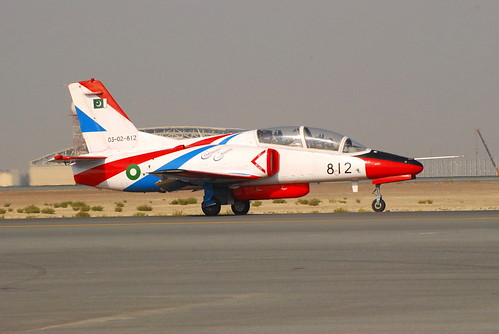
Here is a chance that India blew to send a strong message for peace with both Pakistan and China. An Egyptian diplomat based in New Delhi apparently offered recently to help Indian Air Force overcome its shabby pilot training program.
According to a report by the Indian magazine Business Standard, the Egyptian official offered a novel solution: An Egyptian Air Force training crew flown from Egypt to India to train Indian pilots using Karakoram-8, the multirole trainer jointly developed by both Pakistan and China and now used by a growing list of countries, including Egypt, Sri Lanka, Indonesia, Malaysia, Zimbabwe, Myanmar, Namibia, not to mention the air forces of both Pakistan and China.
Says the Indian magazine: "Since the offer was not followed up in writing, the Indian Air Force (IAF) was spared the embarrassment of having to reply."
But the Egyptian diplomat was not playing dumb. He knew what he was saying. The Egyptians are no novices in diplomacy. Maybe he was just hoping to make a small indirect breakthrough in India's tense relationship with both Pakistan and China. Cairo enjoys excellent relations with Islamabad and Beijing.
It would have been a smart move had the Indian air force accepted the offer. New Delhi has close ties to Egypt and extensive military-to-military relations. So there is no question of trust deficit. Using a trainer developed by Pakistan and China would have said a lot about how confident India is about itself. The move would have also made financial and practical sense. Despite India's massive military procurement program, it's pilot training record is downright embarrassing. Again, here's a quote from the same report: "... the IAF’s notoriously unreliable basic trainer, the HPT-32 Deepak, was grounded after a horrific crash that killed two experienced pilots. In 17 Deepak crashes so far, 19 pilots have died."
This move would have done good where Indian diplomacy in recent years has done little to improve relations with its two neighbors.
The list of Indian hostile messages to Pakistan and China is long [acquiring Pakistan-specific weapon systems, building Pakistan- and China-specific bases near the two borders, quietly supporting terrorism inside China in Tibet in Xinjiang and Inside Pakistan's Balochistan and in cities close to Pakistan's border with India.
The Karakoram-8, and its several recent upgraded models, is jointly developed and produced by China Nanchang Aircraft Manufacturing Corporation and Pakistan Aeronautical Complex. The plane is called K-8 Karakorum after the mountain range that separates China and Pakistan. Although it is a trainer, the jet can be used for light air-to-ground combat roles with easy modifications. [See specifications here].
Thursday, April 8, 2010
India's New Army Chief Has China In Sight

Over the past few months, the Indian army was divided in two: half supporting former army chief Gen. Kapoor, and the other half supporting Gen. Singh, then in-charge of the eastern command who succeeded this month in dislodging the army chief. Now Gen. Singh’s first task is to reunite a divided army. But that’s not all. This is an in-depth look that reveals how Gen. Singh comes with some other interesting plans. Our friends in China must know about this one.
Read the full report here.
Wednesday, March 3, 2010
Waiting For a Pakistani Mao
Just two years after the the return of Pakistan's shady democrats to power, even moderate commentators are calling for change. And in the case of commentator Ms. Anjum Niaz, they talk about revolution.
Pakistan is a country where even democracy will fail without some iron-handed intervention to set things right. Sometimes reform can't be put to vote, as I argue in my column, A Smart Coup: Why One Last Military Intervention In Pakistan Remains A Possibility. Here is an excerpt from Ms. Niaz's column today in The News International that sums up the stagnant governing culture in Pakistan these days, one that has been created by both political and military rulers, and one that needs to be changed to make Pakistan viable in the 21st century:
Pakistan is a country where even democracy will fail without some iron-handed intervention to set things right. Sometimes reform can't be put to vote, as I argue in my column, A Smart Coup: Why One Last Military Intervention In Pakistan Remains A Possibility. Here is an excerpt from Ms. Niaz's column today in The News International that sums up the stagnant governing culture in Pakistan these days, one that has been created by both political and military rulers, and one that needs to be changed to make Pakistan viable in the 21st century:
"Last Sunday on a PIA flight from Karachi to Islamabad, we had a VIP travel in the first-class cabin. When the flight landed in Islamabad, we were made to wait until the VIP was safely seated in his waiting Mercedes flying two flags – the Pakistan and perhaps the PPP flags. The wait for us was not long, but what was shocking was to see the car drive up to the apron, as close as it could get to the aircraft. Was the VIP a foreign guest warranting maximum security? No. He was in fact Raza Rabbani! To make sure I was not hallucinating, I double-checked with a member of the crew as we alighted. The airhostess confirmed it was the senator. Rabbani is currently chairperson of the Parliamentary Committee on National Security and also heads the Parliamentary Committee on Constitutional Reform. Do his handlers think that ordinary passengers like us are a threat to his life and therefore he must be whisked away the minute he sets foot on the ground?
"Raza Rabbani is one of the very few politicians who have been able to attain and sustain a high level of credibility in the eyes of public as well as among all the political parties," says a Google search I did on him today. "He is one politician who does not have any scandals associated with him; financial, moral, or political. He does not come from a feudal background, but earned his credibility as a competent lawyer and then as a principled political leader."
Why then does Rabbani fall for the VIP trappings? Surely, his life is not threatened the way Rehman Malik contends that his is? Malik has excused himself from appearing in person at courts because our security czar claims that there are people out to kill him.
I wrote on the chief secretary Punjab last week. He's on leave these days because the car that he was sitting in killed a man. The chief secretary's chauffeur is perhaps behind bars. But here is what he said against his boss according to a Lahore-based English newspaper report appearing on January 28. Permit me to reproduce it verbatim: "Ghulam Murtaza, the Punjab chief secretary's (CS) driver who was arrested on Tuesday for running over a retired colonel, has alleged that the CS had slapped him for not driving fast, shortly before the car hit and caused the death of Col (r) Muhammad Ikram, sources privy to the investigation told the daily. 'Most of the drivers left due to Javed Mahmood's unruly behaviour... the CS is known to use rough language and has sometimes even slapped drivers, telling them to drive faster,' sources in the Punjab Civil Secretariat said. They also claimed that in the past week, the CS had manhandled and humiliated Murtaza in front of the camp office staff over a minor oversight. On the day of the accident, the driver himself was under great psychological pressure, sources said. A number of drivers, who had worked for the CS, told the daily that Javed Mahmood had a habit of humiliating his drivers during out-of-station trips. Interestingly, Javed Mahmood has replaced around 15 staff drivers since his posting as the head of the province's civil administration in March 2008. According to the sources, Ghulam Murtaza has claimed that soon after the incident the CS got out of the car and walked away, directing him later on the phone not to disclose to anyone that he (Javed Mahmood) was in the car at the time of the accident."
If the damning testimony by the driver as reproduced above is baloney, the ex-chief secretary must set the record straight. It's most damaging. But more often than not, it's a reflection of how our bureaucrats treat their inferiors, especially servants, who dare not protest. The issue here is the cold hauteur of civil servants, trained to be rude, rough, boorish and harsh towards their servants and lower staff. Their wives and children too treat those who serve them with arrogance. It becomes a part of their DNA.
Pakistan is cursed with a VIP culture that will just not go away. There is no cure. From Zardari down to the thanedar or the patwari, we the ordinary citizens must accept these holy cows and be meek, submissive and servile before them. God forbid, should one come in their path, one is pushed aside like a speck of dust and told to remove himself/herself, even reprimanded and warned for polluting the stratified air the VIP breathes. 'Get lost' is the message!
Some even get killed! Like the colonel and the unlucky motorcyclist who happened to be on the same road as the senior adviser to the Punjab chief minister, Sardar Zulfiqar Khosa, driving from Derawar Fort after the conclusion of the Cholistan Jeep Rally. He was squished like a fly by the fleeting police escort 'guarding' Khosa. Two other riders survived the swat but are probably maimed for life.
Nothing short of a revolution will scorch this bumper crop of VIPs from our land."
Raise Your Price, Pakistan
Raise Your Price, Pakistan
How about exchanging Taliban Number Two Abdul Ghani Baradar for terror master Brahamdagh Bugti and the dismantling of the terror network targeting Pakistan’s Balochistan?
By Ahmed Quraishi
Tuesday, 2 March 2010.
ISLAMABAD, Pakistan—Pakistan has agreed to hand over Afghan Taliban’s number 2, Mullah Abdul Ghani Baradar, to Afghanistan. How about asking for Mr. Brahamdagh Bugti in exchange? Or for the dismantling of the Afghan-based terror infrastructure targeting Pakistani Balochistan?
There are signs that Afghanistan’s role as a base for anti-Pakistan operations over the past seven years is gradually shrinking. But it is not completely over yet. The rollback in that role is directly linked to what the United States wants. And Washington’s recent change of heart regarding Pakistan’s role and legitimate regional security interests are the result of the Pakistani military standing its ground, not any genuine change of heart in US policymaking circles. This is why you did not see any US official jumping in excitement at the idea of Pakistani military training the Afghan National Army, which is what our army chief has proposed.
So the change in the US position may be tactical, forced by Pakistani straight talk. Examples abound, including how CIA dragged its feet before it finally began targeting anti-Pakistan terror groups and leaders in the border area. There might have also been some visible decrease in the level of logistical support that the so-called Pakistani Taliban received from the Afghan soil [and not all of it from the proceeds of Afghan Taliban’s drug trade, as Afghan and American officials have been trying to convince their Pakistani counterparts]. Pakistani officials are yet to certify this decrease publicly. Granted that Admiral Mike Mullen is someone who genuinely tries to understand Pakistani concerns. And he has been doing his bit with apparent sincerity in the past few months. But there are still some tensions below the surface. A Time magazine story over the weekend tried to delink US connection to the Jundullah terrorist group and throw the entire responsibility at Pakistan, targeting Iranian paranoia by suggesting a Pakistani intelligence support for Jundullah ‘as a tool for strategic depth.’ This type of media leaks and background intelligence briefings have to stop. Enough of the demonization of Pakistan that the US media unfortunately spearheaded over the past three years, apparently through some kind of semi-official patronage. If US officials can bluntly accuse their Pakistani counterparts of sponsoring ‘anti-American articles’ in newspapers, whatever that means [What is ‘anti-American articles’ anyway?], surely Islamabad can pose the same question, especially when Pakistan’s case is stronger.
The same goes for the admirable US nudge to India to resume peace talks with Pakistan. Had things not gone wrong in Afghanistan for the grand US project, Washington was all set to introduce India as the new regional policeman in Afghanistan following the eventual pullback of NATO and US militaries from that country. Pakistan was being pushed to accept this as fait accompli and Mr. Zardari’s pro-US government was more than willing to play along. Again, a Pakistani public opinion that is not ready for such a major one-sided Pakistani concession probably threw a spanner in the works.
Foreign Secretary Salman Bashir must be commended along with his team for stating the Pakistani bottom line. Forget the US statements on the need for peace between Pakistan and India. The fact is that the US played the two countries against one another in Afghanistan in the past eight years. If Pakistan accepts, a photo-op would work just fine for Washington as it does for New Delhi. We’d be asking too much if we think anyone in New Delhi or Washington is really itching to help Pakistan resolve its grievances with India. It’s just that the regional dynamic is helping us at this point in time. So let’s make the most out of it while we retain the initiative. Instead of the theatrics, we must ask for something substantial this time. No more prolonged people-to-people exchanges. There is no problem between our peoples. And please, no more equating Pakistan’s responsibility for peace with India’s responsibility. The onus is on India. It is the bigger country. It can change the entire mood in the region by taking small steps to alleviate Pakistani insecurities. It can do so by taking steps in the water dispute, in improving how it treats Pakistani visitors, and by reducing tensions with the Kashmiri people on the ground.
Bottom line: Enough of selling ourselves cheap over the past eight years. Pakistan should secure its interests and accept nothing less.
An edited version of this op-ed was published by The News International.
Verbatim copying and distribution of this entire article is permitted in any medium
without royalty provided this notice is preserved.
MUST SEE
Saturday, February 20, 2010
America's Jilted Lover In New Delhi
Pakistan army chief General Ashfaq Parvez Kayani has offered to train the Afghan army. This is part of a list of demands – not all of them made public – that seek to correct a basic American mistake: While courting Pakistan as an ally, Washington secretly empowered India.
Until last month, Washington was hoping that India’s relatively cheaper soldiers will come handy where the Europeans won’t, and that a bungled Afghan project could be continued on, well, a leaner budget.
Washington is now in the process of correcting this mistake. And not because of any real change in heart. It’s just that Islamabad is reasserting itself.
This has sent alarm bells ringing in New Delhi. And within the pro-Indian media in Washington.
Exhibit A: an op-ed in the Wall Street Journal, Let India Train the Afghan Army, written by Indian analyst Sumit Ganguly on Feb. 14. The op-ed could have been written in the national security adviser’s office in New Delhi. The talking points might as well have originated there.
Mr. Ganguly basically begs Washington to consider the Indian army for a role in Afghanistan. Not doing that, he warns, would amount to ‘a grave strategic error’. The op-ed actually ends with these three words.
The Indian analyst sounded almost desperate with his pushy sales pitch [Example: India’s army enjoys ‘an optimal "teeth to tail" ratio, specifically trained in counterinsurgency operations’].
But there are genuine reasons why Mr. Ganguly’s idea is a bad one.
India is one of the reasons for the US debacle in Afghanistan. Back in 2002, self-styled Indian experts on Pakistan and Afghanistan convinced Washington that India can provide better intelligence on extremist groups than the double-dealing Pakistanis. Washington listened. The Bush White House and Pentagon were more than happy to buy Indian theories on who to deal with inside Afghanistan and how to keep Pakistan at bay.
Partly due to this (ill) advice, discredited Afghan warlords were brought on board. Indian intelligence agents were given a lot of space in Afghanistan. New Delhi used this space against Pakistan. Not all of the terrorism inside Pakistan over the past five years is the result of Taliban and al-Qaeda.
Indians misled the Americans not just on the ground in Afghanistan but also in the corridors of Washington’s think tanks. Indian experts offered provocative ideas on how Pakistan is ripe for a redrawing of borders along alleged linguistic and ethnic fault lines, a la Iraq. Bush-era Washington listened eagerly as Indian experts promoted the idea of using these fault lines as a negotiating card with Pakistan to secure its cooperation. This is how a separatist insurgency in Pakistan’s Balochistan province was born in 2005.
Needless to say, Indian involvement backfired. Spices are not good in every dish.
As the Indian fingerprints became clearer, a feeling grew among Pakistanis that Washington took Pakistan for a ride since 2002. Never before in the half-century of US-Pakistani relations has anti-Americanism been this high in Pakistan. It’s totally unheard of.
Now Washington is realizing its mistake and adjusting its Afghan policy accordingly. The United States must not be distracted again.
No one in Washington is really enthusiastic about the Pakistani offer to train the Afghan army. You will not see Wall Street Journal publishing an op-ed advocating Pakistan’s viewpoint anytime soon. But this festering anti-Pakistanism in the US media should give way to a new way of looking at Pakistan, America’s demonized ally.
Until last month, Washington was hoping that India’s relatively cheaper soldiers will come handy where the Europeans won’t, and that a bungled Afghan project could be continued on, well, a leaner budget.
Washington is now in the process of correcting this mistake. And not because of any real change in heart. It’s just that Islamabad is reasserting itself.
This has sent alarm bells ringing in New Delhi. And within the pro-Indian media in Washington.
Exhibit A: an op-ed in the Wall Street Journal, Let India Train the Afghan Army, written by Indian analyst Sumit Ganguly on Feb. 14. The op-ed could have been written in the national security adviser’s office in New Delhi. The talking points might as well have originated there.
Mr. Ganguly basically begs Washington to consider the Indian army for a role in Afghanistan. Not doing that, he warns, would amount to ‘a grave strategic error’. The op-ed actually ends with these three words.
The Indian analyst sounded almost desperate with his pushy sales pitch [Example: India’s army enjoys ‘an optimal "teeth to tail" ratio, specifically trained in counterinsurgency operations’].
But there are genuine reasons why Mr. Ganguly’s idea is a bad one.
India is one of the reasons for the US debacle in Afghanistan. Back in 2002, self-styled Indian experts on Pakistan and Afghanistan convinced Washington that India can provide better intelligence on extremist groups than the double-dealing Pakistanis. Washington listened. The Bush White House and Pentagon were more than happy to buy Indian theories on who to deal with inside Afghanistan and how to keep Pakistan at bay.
Partly due to this (ill) advice, discredited Afghan warlords were brought on board. Indian intelligence agents were given a lot of space in Afghanistan. New Delhi used this space against Pakistan. Not all of the terrorism inside Pakistan over the past five years is the result of Taliban and al-Qaeda.
Indians misled the Americans not just on the ground in Afghanistan but also in the corridors of Washington’s think tanks. Indian experts offered provocative ideas on how Pakistan is ripe for a redrawing of borders along alleged linguistic and ethnic fault lines, a la Iraq. Bush-era Washington listened eagerly as Indian experts promoted the idea of using these fault lines as a negotiating card with Pakistan to secure its cooperation. This is how a separatist insurgency in Pakistan’s Balochistan province was born in 2005.
Needless to say, Indian involvement backfired. Spices are not good in every dish.
As the Indian fingerprints became clearer, a feeling grew among Pakistanis that Washington took Pakistan for a ride since 2002. Never before in the half-century of US-Pakistani relations has anti-Americanism been this high in Pakistan. It’s totally unheard of.
Now Washington is realizing its mistake and adjusting its Afghan policy accordingly. The United States must not be distracted again.
No one in Washington is really enthusiastic about the Pakistani offer to train the Afghan army. You will not see Wall Street Journal publishing an op-ed advocating Pakistan’s viewpoint anytime soon. But this festering anti-Pakistanism in the US media should give way to a new way of looking at Pakistan, America’s demonized ally.
Tuesday, February 16, 2010
A Smart Coup: Why One Last Military Intervention In Pakistan Remains A Possibility

… But we are nowhere near that right now. Gen. Kayani certainly has no such thing in mind according to people who have met him.
By AHMED QURAISHI
Monday, 15 February 2010.
ISLAMABAD, Pakistan—"This was my first interaction with the soldier who commands the seventh largest military force on the face of the planet.”
With this catchy line, Dr. Farrukh Saleem began his brief and fascinating account of a meeting with General Ashfaq Parvez Kayani.
On Feb. 10, 2010, Gen. Kayani met a group of Pakistani commentators and security analysts. The briefing was the third since the military began asserting Pakistan's legitimate security and strategic interests in Afghanistan and the region.
On January 28 and 29, Gen. Kayani told NATO commanders in Brussels that Pakistan’s legitimate security interests will have to be respected.
Earlier, he told Adm. Mike Mullen, Gen. David Petraeus, and Gen. Stanley McChrystal that instead of worrying about appeasing India, Washington better start paying attention to Pakistan.
This is a major development in the eight-year US-led war in Afghanistan.
At one point, Mr. Saleem makes an interesting observation about Gen. Kayani’s cool demeanor.
“Yes, he has the capacity for abstract thought, cold rationality and coarse creativity - all in one,” he says. “And yet he inhales reconstituted tobacco. Yes, he uses a filter and a cigarette holder. Yes, he never takes deep puffs and, yes, he only consumes half a cigarette at a time.”
At another point, Mr. Saleem makes an interesting use of pun. Talking about the general’s smoking habits, he says the following: ‘He knows that some of the things that he is doing are wrong, but still won't give them up.’
Probably it’s a polite reference to the conspiracy theories that fill the US and British media, or the Am-Brit media, about Pakistan, its military and its intelligence agencies. So some skepticism is natural.
But the best part of his column in The News International was this concluding paragraph:
“I can tell you that I came back both proud but with a painful realisation; proud knowing that our legions are being led by strategic minds and sad to have discovered the much too visible an intellectual gap between our top political brains in Islamabad and our strategic minds at work in Rawalpindi. And what does he think about our politicians? When it's breezy, hit it easy.
Could it be that the army rules not through the barrel of a gun but because of their intellectual superiority? Could it be that the army rules because our politicians have failed to institutionalize politics? Could it be that the army rules because our political parties do not transcend individual human intentions? Could it be that the army rules because it has structures, mechanisms of social order along with strategic thinking?”
In essence, Mr. Saleem hit at the core reason why the Pakistani military intervenes every time politicians lead the nation to a dead end.
Most importantly, the above reasoning answers even a more important question: Why the military mounts successful interventions and why the politicians can’t muster the moral authority to resist them.
Pakistani politicians remain a chaotic, undisciplined and shortsighted bunch. Their parties are messy and loose groupings of special interests in their crudest form. Almost all of them have lifetime leaders who never give way to fresh blood. And they are not public institutions but private, family-owned affairs.
Since the return to democracy in Pakistan in February 2008, hardly any of the parties in government or opposition devoted any high-level party meetings to education, health, culture and sports. None of them has plans in place for running the country. Worse, none has any vision.
The best place in Islamabad these days to see this mess in action is the National Defense University. Since 2002, the NDU has been holding the annual National Security Workshop. This is a unique 6-week course. It brings together politicians, military officers, businessmen, lawyers, social activists and journalists. The group is taken through a virtual tour into the corridors of strategic decision making in Pakistan. The course ends with a weeklong exercise that sees the class divided into a Pakistani government and a shadow government, complete with their own secretariat and staff. On the last day, the two governments frame and deliver a policy plan to deal with a hypothetical strategic crisis confronting Pakistan. The plan has domestic, military and foreign policy components. Often, senior commanders from Pakistani military’s General Headquarters attend the last day’s presentations.
NDU officials, both civilian and military, have one observation that has been constant during the past eight years of national security workshops: Military officers, businessmen, social activists and journalists often show the best performance. Politicians come last. Most can’t even draft a single-page policy brief, or work with a PowerPoint presentation.
In essence, middle class Pakistanis – military officers, businessmen, social activists and journalists – fair better than the politicians, mostly a feudal landowning elite.
This gets blurry sometimes, but you get the general idea.
And middle class Pakistanis can’t make it to political parties, let alone to the federal and regional parliaments and governments.
Elections might change this, but certainly not in the foreseeable future. And Pakistan may not have the luxury of time.
If the national deadlock continues with mounting domestic instability due to massive corruption and mismanagement by our politicians, the military may have to contend with one last intervention. It would be the last because if the military failed this time to help set Pakistan on the right track, it could be a free fall after that because Pakistanis are getting increasingly restless with the existing decay. Social turmoil simmers just beneath the surface.
If it comes to a military-led intervention, both military officers and politicians will have to stay out of actual power. The army chief may not become a chief executive. The military might have to look into a new concept called the ‘Smart Coup’, where the military can bring capable Pakistanis to power with a firm executable plan of reform over five years, or more, fully backed by the military. There may not be time to put the plan to vote. It will have to be implemented.
This would be the absolute last option. But we are nowhere near that right now. Gen. Kayani certainly has no such thing in mind according to people who have met him. He wants democracy to work for the time being and he has proven this by resisting several opportunities to intervene over the past two years.
Pakistan is full of resources and opportunities, but it lacks good leadership and clean management. Even the bare minimum of these two commodities is not available in today’s Pakistan.
Books on political science and theory in Washington and London can’t help with this. Pakistanis will have to do what’s best for their homeland.
Thursday, February 11, 2010
Pakistani Professors Must Stop Pakistan-Bashing


Dr. Ayesha Siddiqa, teaching defense and strategy to Pakistani students, calls Pakistan's Founding Father and the national poet 'homosexuals'.
And Prof. A. H. Nayyar, an alumni of the largest university in Islamabad, is asking followers to fake evidence against Pakistan's founder in order to show him to young Pakistanis as someone who ate ham, which is prohibited for Muslims and Jews.
What's eating Prof. Nayyar and Dr. Siddiqa is that there is a revival taking place among young Pakistanis, the single largest group in a population of 170 million. The revival is unprecedented and seeks to renew faith in Pakistan. It is a reaction to anti-Pakistan reports and think-tank findings mainly in the United States over the past three years that sought to dismiss Pakistan as a nation on the verge of collapse. Pakistanis have also been galvanized by evidence showing Indians exporting terrorism into Pakistan from US-controlled Afghanistan.
The evidence against both teachers, presented here for the first time, indicates a major problem facing most Pakistani colleges and universities. A small but noisy group of professors is encouraging students to attack the very foundations of the Pakistani state.
This is alarming considering the timing and the regional instability resulting from America's Afghan war.
Both Dr. Siddiqa and Prof. Nayyar have access to one of the most influential Pakistani seats of learning, the Quaid-e-Azam University in the heart of the Pakistani capital. Both of them are also known to hold what many describe as views more sympathetic to Pakistan's regional detractors.
Dr. Siddiqa's statement was part of a discussion she had with an Indian journalist on Facebook on Feb. 10, 2010. A screen shot can be seen with this report. [Click here to see the actual conversation on Facebook].
Prof. Nayyar's statement came in a discussion on Feb. 8, 2010 by members of an Internet mailing list called Socialist Pakistan News. A screen shot is provided.
Bashing Pakistan, its history, the Pakistan Independence Movement, the Founding Fathers, and the country's military are common themes among some of these university professors. Coincidentally, most of them also happen to be very supportive of American and Indian criticism of Pakistan. In Dr. Siddiqa and Prof. Nayyar's cases, both of them are active members of so-called peace groups that explicitly embrace Indian hegemony in the region.
[If you are a student and have information about anti-Pakistan activities on your campus, please email details to PakNationalists@gmail.com . All emails will remain confidential.]
Subscribe to:
Posts (Atom)