Thursday, April 29, 2010

Indian ISI Spy: The Interpreter Who Debunked Indian Lies


The warmongers in the Indian establishment just can't get over it. First they said she didn't have access to anything important. Now she's a possible Muslim. Well good for her. She was an Urdu translator in the embassy. I thought all that propaganda about Pakistan and India sharing the same language and culture was true [as if!]. If we share all that, why the need for a translator inside the Indian Embassy in Islamabad? Indian warmongers use this shared-culture propaganda to convince the world that Pakistan's independence was a mistake and it didn't need to happen [Who says 'India' existed before 1947? It was a British colony, and a Muslim colony before that. Pakistan secured freedom from the Brits, not from Indians. And which is it, 'India' as named by the Brits, or 'Hindustan' as named by the Muslim emperors who spawned Pakistan, or 'Bharat' as the Indians called themselves before the Pakistanis and Brits came along?].

Anyway, a message to our warmonger friends in New Delhi: Stop hiding terrorist Brahamdagh Bugti in Kabul, and stop kidnapping and brainwashing Pakistani kids from Balochistan and Khyber-Pakhtunkhwa and flying them to India from Kabul for terrorist training.

[P.S. Also check all your other embassies everywhere, an Indian ISI agent might be lurking there!]

[P.S. To all Pakistanis, don't rub it in. It must really be hard. First Sania Mirza sells out to the Pakistanis. Most Indians said, 'So what! she's a Muslim. Treason is in her genes. But then Madhuri Gupta sells out too, to the Pakistanis!]

Tuesday, April 27, 2010

What Kayani Can Learn From Putin

By allowing foreign militaries a free reign in our tribal belt to kill hundreds of innocent Pakistanis, Pakistan is committing the same mistake as Putin’s, who initially did well a decade ago by crushing the rebellion in Chechnya but now is creating more rebels because of highhandedness. Also, Pakistan has no business eliminating the Afghan Taliban, who survived the 2001 war thanks to US mismanagement. The problem should be solved inside Afghanistan, not Waziristan.


ISLAMABAD, Pakistan—It was brave on the part of Pakistan army chief to publicly apologize for mistakenly bombing and killing tens of innocent Pakistanis in a Khyber Agency village. In a similar incident in 2006 during the reign of his predecessor, where a US missile killed up to 80 children in a school, the action was not only defended but the Pakistani military was forced to own it, giving the first signal to everyone that innocent Pakistanis can be killed with impunity as part of the war on terror. Since then, more than a thousand innocent Pakistanis have lost their lives as collateral damage in these ‘successful’ drone attacks. This would remain one of the darkest spots in our history where our rulers shirked their responsibility for the protection of every Pakistani citizen on our soil.

But the army chief’s apology is also an opportunity to review whether it is acceptable to have allowed ourselves and our American allies to import their methods of dealing with occupied populations in Iraq and Afghanistan to be used with our own people inside our own homeland.

This review is important because these imported methods of dealing with occupied populations are not only unsuitable here but are radicalizing our own citizens instead of pacifying them, producing more disgruntled citizens for our enemies to recruit, brainwash and use to kill more Pakistanis and spread mayhem.

In using these imported methods we are committing the same mistake that President Putin, now a prime minister, has been committing in Chechnya for the past decade. He successfully curbed the insurgency and ended the ability of the US and other countries to use Chechnya to bleed Russia by covertly supplying weapons and intelligence to the insurgents. But instead of building on that success, Mr. Putin continues to use aggressive tactics in Chechnya, breeding more insurgents and more opportunities for outsiders to meddle. [The latest suicide attacks in Moscow involved a young woman who blew herself up because Russian military killed her husband].

The same is happening in our tribal belt. Just when we have stamped out insurgents and criminals in some pockets [thanks to Gen. Kayani and his team], here comes the collateral damage – both from CIA drones and our own occasional mishaps – to create additional pools of disgruntled citizens ready to be picked up by anyone who has resources to use them against the Pakistani state.

It’s a vicious cycle that destroys the massive nation-building work that our military is conducting in places such as Swat, with the military’s own money and often without any support from incompetent civilian governments in Islamabad and Peshawar. For example, few people know that our soldiers donated two days’ pay to collect US$1.2 million to renovate more than half of the 400 schools in Swat destroyed by terrorist groups. The army is building roads and restoring water supply lines in Swat, even organizing cultural and musical events to provide much need entertainment to a disturbed population and restore normalcy. Not to mention achieving the impossible by restoring two million refugees back to their homes in less than a year.

But all of this good work is eaten away by the kind of massive bloodshed that occurred on April 10 at remote Tirah Valley of Khyber Agency. Despite the brave apology, the accident will create new rebels and revenge seekers. It also brings into focus an old complaint about the veracity of intelligence that the Americans have and share with our military. Once again, the insurgency within our tribal belt is directly linked with the American mismanagement in Afghanistan. Allowing the Americans or anyone else to set up spy networks inside our territory and unleash private defense contractors in beards and local dresses is like allowing our own people and territory to be treated in the same manner as Iraq and Afghanistan, which are foreign occupied zones. This foreign element, including collateral damage and the faulty intelligence that causes it, is also sending a wrong message to ambitious criminal and tribal leaders and politicians, and that message is: the Pakistani state and its military are too weak to check foreign meddling and thus taking matters into their own hands is a legitimate option.

Another mistake that is bound to breed more enemies for the state is our faulty policy of not clearly asserting that the Afghan Taliban along with any other Afghan parties are legitimate Afghan political players. Fighting them is not and should never be Pakistan’s responsibility. The presence of some Afghan Taliban on Pakistani soil is expected to due to close ties between Pakistani and Afghan Pashtuns, but the solution is not for Pakistan to help US eliminate them but to resolve the deadlock inside Afghanistan that has resulted in the Afghan Taliban escaping their country to take refuge here.

Make no mistake about it: rebels who terrorize and kill Pakistanis must be eliminated by force and without mercy. But allowing outsiders to kill our people directly or through faulty intelligence means we will see suicide attackers for a long time to come.

This op-ed was originally published by The News International in Pakistan under the title, Waziristan And Chechnya.


Creative Commons License
This work by PakNationalists is licensed under a Creative Commons Attribution-No Derivative Works 3.0 Unported License.

Saturday, April 24, 2010

A Wedding To Start A War


How the wedlock between a Pakistani sportsman and an Indian tennis player is a PR disaster for India and holds implications for relations with Pakistan

A sign of Pakistan-India peace? Hardly. Read how the celebrity wedding was loaded with the kind of symbolism that rattled India and sent the wrong signals to Pakistan

By Ahmed Quraishi
Thursday, 22 April 2010.

ISLAMABAD, Pakistan—Trust me, this is a wedding that India never wants to see again. Ever. 

Never before has a wedding tested India's relations with Pakistan and created new misunderstandings that will echo for a long time to come. [Yes, we're still talking geopolitics.]

American and British commentators piled over each other to welcome the wedding between Pakistan's ace cricketer Shoaib Malik and India's star tennis player Sania Mirza as an event that would bring Pakistan and India closer.

  Hindu extremists burning Sania Mirza's effigy for marrying a Pakistani celebrity

Instead, it exposed ugly Indian insecurities, especially the rampant anti-Pakistanism in India not just in New Delhi but also among ordinary Indians. This is in sharp contrast to the warmth shown to Indians at all times in Pakistan, regardless of tense official relations.  

While most Pakistanis innocently celebrated the wedding as a chance for peace, Indians wore long faces, like a parent angry at a daughter who's ran away to marry the wrong man. Forget peace, Indians fretted that Mirza, a Muslim, might ditch India and start representing her husband's country Pakistan at international tournaments.

Indians, both in and out of government, did everything they could from day one to scuttle the wedding. When nothing worked they unleashed saffron-clad Hindu extremists to scare Sania Mirza and her parents for 'betraying' India. When that failed, New Delhi confiscated the Pakistani sportsman's passport on a lousy excuse while the Indian media went digging up dirt on the Pakistani young man to dissuade Mirza's family from going ahead with the wedding.   
Did Sania really ditch India?
The irony is that India's few noisy bottom feeders in Pakistan staked their reputations on this wedding; almost convincing Pakistanis that the wedding was a sign India was dying to be friends with their country. They never dreamed that India would instead be dying of jealousy and petty antagonism. 

SCARY SYMBOLISM FOR INDIA

What everyone missed was that the wedding was loaded with symbolism of the type that rattles India's nerves.

First, the Pakistani sportsman married a fellow Muslim. That undercut Indian government’s claim that Indian Muslims are not attracted to everything Pakistani, and vice versa.  Indian officials watch such happenings closely. Had the Pakistani married an Indian Hindu, Indian media managers would have seized the wedding to bolster their favorite line of propaganda about how Pakistan is a lost part of India that needs to atone for its sins and come home  [This is one of many historical delusions that Indians relish and which continue to inform official Indian mindset toward Pakistan, ignoring that India itself never existed before the Brits created it in 1947 out of what used to be a Muslim empire, but that's another story]. 

Then there's the symbolism of Sania Mirza's hometown Hyderabad-Deccan. The city-state was one of the richest Muslim princely states for centuries, ruled by Turkic-Persian Muslim elite whose descendants include people such as the Mirzas. The rich state almost joined Pakistan in 1947 when India invaded and forcibly annexed it. Pakistan was too weak then to contest the occupation. Now imagine the irony: a celebrity girl emerging seventy years later from that city to marry a Pakistani?  This is not good for Indian ego.

Interestingly, many Muslim natives of the city are Pakistani citizens who live in Pakistan. Local weddings involving a bride or a groom from Pakistan are common. And this freaks out Indian authorities.   

The third symbolism that rattles India is that Muslim natives of Sania Mirza's city face religious discrimination despite India's claim to secularism. Just a few weeks before the wedding, India's majority Hindus waged pitched battles in the streets and alleys against the city's Muslim natives.  A high-profile wedding that links these Indian Muslims to Pakistan is bad influence considering the timing.

Even worse as far as timings go, on the eve of Sania's wedding with Pakistan's star, an American-Indian Muslim group slammed Indian authorities for trying to protect Hindu extremist groups during the probe into the riots.

PAKISTANI PERSPECTIVE

But these are Indian insecurities from an Indian perspective. What Pakistanis saw from their side was confirmation of India's record of being hostile to Pakistanis despite lip service to peace.

Indian visitors have never been humiliated in Pakistan in the past 63 years. Not a single incident can be cited. In contrast, a Pakistani delegation that returned from India as recently as December 2009 spoke of mistreatment. One visitor said, "They treated us like dogs. Do we treat them like this when they come here?"

In fact, thousands of Indian pilgrims visit their holy sites in Pakistan each year. Year in and year out, they are received as heroes by Pakistani authorities in an effort to send them back as ambassadors of Pakistan in India. And this has been going on for at least the past two decades.

In return, Indian small-mindedness seems to know no bounds.

In 2006, when both Pakistan and India launched a friendship train called Samjota to help citizens visit both countries, 59 Pakistanis were burned alive when the train was returning from the Indian capital to Pakistan. It turned out that Indian military intelligence officers connived with Hindu terror groups to sabotage the train. The unlucky Pakistanis believed Indian media’s – and their own Pakistani media’s – hype about peace and traveled to India never to return alive.

Deep inside, Indians are vindictive when it comes to Pakistan. Indians have been given a steady dose of anti-Pakistanism over the past 63 years and told in as many words that Pakistan is an illegal construct, somehow ‘stolen’ from India. And justice must be done. I leave it to your imagination what that justice would look like if India has its way with Pakistan.

One Indian politician went as far as accusing Mirza of betraying her country because she married a Pakistani. The poor girl and her family were so terrified she finally had to release a statement insisting she married the man and not his country.

Facing this Indian meanness, Pakistan could have made small gestures to make its displeasure known but didn’t, mostly out of incompetence since Pakistani governments are not media savvy anyway.

Pakistan could have scored a point by issuing a statement on the anti-Muslim riots in Hyderabad-Deccan as a way of getting back at India for the way they treated Pakistani sportsman Malik. But Pakistan didn’t.  What’s even more startling is that the Pakistani federal minister who was ordered by Prime Minister Gilani to travel to India to attend the famous wedding refused to meet with the aggrieved local Muslims of the city in order not to embarrass the host government.

All in all, India wasted a great chance to win the Pakistani public opinion. As for Pakistanis, the whole episode confirms what we already know about the Indian intolerance and unease when dealing with anything that has to do with Pakistan. Hopefully, this analysis will also help our friends in the world understand the psychology behind Indian intransigence in resolving problems and making peace with Pakistan.
Creative Commons License
This work by PakNationalists is licensed under a Creative Commons Attribution-No Derivative Works 3.0 Unported License.


Tuesday, April 20, 2010

How Military Nurseries Produced Pakistan’s ‘Democratic Warriors’


Military-led governments in Pakistan have failed in creating long term stability and fostering national identity, like the ruling party did in China. This failure is well known. But Pakistan’s destructive politics can’t end without understanding another major failure: How Pakistan’s democratic elite is really not democratic at all.

Forget about building a great country and a healthy and prosperous people, Pakistan’s political elite divides Pakistanis by language, sect and violent politics because it has nothing else to offer in exchange for getting elected. And with the new amendments to the Pakistani constitution, which strengthen family-run dictatorships within parties, there is hardly any chance that the able and the willing among 170 million Pakistanis will ever get a chance to lead their homeland.

In 2008, these politicians got themselves elected in the name of democracy. But even that credential is questionable.

Retired Lieutenant General Faiz Ali Chishti, who played a major role during the military-led government of former President Gen. Zia-ul-Haq between 1977 and 1988, gave an interesting insight earlier this week in Lahore into the relationship between failed politicians and military coups.

His remarks are important because he said several things that are new and must be noted.

FAKE DEMOCRATIC WARRIORS

Mr. Chishti said that “Several (democratic) champions became leaders while sitting in the laps of army generals.” He listed them as follows:

1. Zulfiqar Ali Bhutto, former Prime Minister of Pakistan [Benefactor: Field Marshal Ayub Khan].

2. Nawaz Sharif, former Prime Minister of Pakistan [Benefactor: Gen. Zia-ul-Haq]

3. Altaf Hussain, the exiled British-Pakistani leader of MQM [Benefactors: Gen. Zia-ul-Haq and Gen. Pervez Musharraf]

4. Jamaat Islami [Benefactors: Gen. Zia-ul-Haq and Gen. Pervez Musharraf]

The irony is that all of them claim that Pakistan’s military should not be involved in major internal decisions when necessary but they never explained why they accepted military help in ascending to power in the first place. Interestingly, despite being discredited as failed and inept, these politicians keep getting second and third chances thanks to the military’s failure to introduce real reforms after every coup. [Also thanks to frequent US and British meddling in our politics for their own objectives. Unfortunately, the Pakistani military has so far been unable to prevent it and, under Musharraf, even took it to new heights!]

Moreover, Pakistani military has maintained an unwritten alliance with this failed political elite, always handing power back to it after every intervention without any attempt to open doors to middle and lower-class Pakistanis to participate in running their country, especially when they have proven to be more creative in taking Pakistan forward in many areas.

One example is Gen. Musharraf, who came to power with a promise to inject new faces into a stagnant system. Eight years later, he not only failed to do that but ended up restoring some of the worst failed politicians back to power as his replacement. The only credible new political face from the late Musharraf period is Member of National Assembly Marvi Memon. To be fair to her, she was a late entrant who proved her mettle on her own in the two and half years since Musharraf’s departure. With her patriotic and inclusive views, a large segment of Pakistan’s younger generation identify with her. But she stands no chance of moving up in a system designed to keep people like her from exercising real power.

THE LOOPHOLE

Mr. Chishti pointed out another irony that exposes the duplicity of the present political elite in Pakistan. An independent Election Commission is what stops military interventionists from legitimizing their rule. So if someone wants to stop future military interventions being endorsed by the country’s courts and parliaments, creating such an independent election commission is the first step. But strangely, despite all the noise over the recent constitutional amendments, called the 18th Amendment, none of the political parties pushed for an independent election commission. The reason is that an independent election commission would also enforce democracy within the parties, challenging lifetime party presidents and ‘chairpersons’.

COUP DECISION INSTITUTIONAL

He said the decision to impose military rule, or Martial Law, is never a personal decision of one man but a collective one of the Army High Command and is a result of full spectrum assessment of the state of the nation.

WHY MILITARY INTERVENES

Since a military coup is not a one-man-show and hence there is no question of personal ambition, then the right question to ask, says Mr. Chishti, is ‘Why the military intervenes?’ He suggests that tackling the reasons would reduce the possibility of such interventions.

Wise words. But they are falling on deaf ears. The mother of all ironies is that when Pakistan Army has a chief who has gone out of his way to support democracy, and even rescued it on a couple of recent occasions, Pakistan’s democratic warriors are leading the country to a grand national failure of epic proportions with their failure to perform.

Tuesday, April 13, 2010

Nuclear Scare In India


This is a threat that the Nuclear Security Summit 2010 in Washington ignored. Pakistan's nuclear installations are close to troubled spots. But India's nuclear and strategic assets are right in the middle of a robust Naxalite separatist insurgency. A nuclear device can be detonated any day in any Indian city by Naxalite rebels who have the will to cause mass casualties in India.

A stunning report that records recent incidents when Indian nuclear security was compromised. Click here to read the full report.


How India Gets Israel's Protection


When Indian filmmakers invented synchronized dancing, they never thought a day would come when it would be used against them.  Here's a hilarious song that answers a fundamental question: How does India secure Israel's protection?  The answer of course is Bollywood-style.


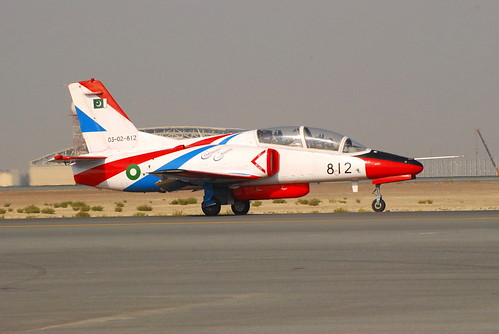
A Pakistani Trainer Jet For The Indian Air Force?


Here is a chance that India blew to send a strong message for peace with both Pakistan and China.  An Egyptian diplomat based in New Delhi apparently offered recently to help Indian Air Force overcome its shabby pilot training program.

According to a report by the Indian magazine Business Standard, the Egyptian official offered a novel solution: An Egyptian Air Force training crew flown from Egypt to India to train Indian pilots using Karakoram-8, the multirole trainer jointly developed by both Pakistan and China and now used by a growing list of countries, including Egypt, Sri Lanka, Indonesia, Malaysia, Zimbabwe, Myanmar, Namibia, not to mention the air forces of both Pakistan and China.

Says the Indian magazine: "Since the offer was not followed up in writing, the Indian Air Force (IAF) was spared the embarrassment of having to reply."

But the Egyptian diplomat was not playing dumb. He knew what he was saying.  The Egyptians are no novices in diplomacy.  Maybe he was just hoping to make a small indirect breakthrough in India's tense relationship with both Pakistan and China.  Cairo enjoys excellent relations with Islamabad and Beijing.

It would have been a smart move had the Indian air force accepted the offer. New Delhi has close ties to Egypt and extensive military-to-military relations. So there is no question of trust deficit.  Using a trainer developed by Pakistan and China would have said a lot about how confident India is about itself.  The move would have also made financial and practical sense.  Despite India's massive military procurement program, it's pilot training record is downright embarrassing. Again, here's a quote from the same report: "... the IAF’s notoriously unreliable basic trainer, the HPT-32 Deepak, was grounded after a horrific crash that killed two experienced pilots. In 17 Deepak crashes so far, 19 pilots have died."

This move would have done good where Indian diplomacy in recent years has done little to improve relations with its two neighbors.

The list of Indian hostile messages to Pakistan and China is long [acquiring Pakistan-specific weapon systems, building Pakistan- and China-specific bases near the two borders, quietly supporting terrorism inside China in Tibet in Xinjiang and Inside Pakistan's Balochistan and in cities close to Pakistan's border with India.

The Karakoram-8, and its several recent upgraded models, is jointly developed and produced by China Nanchang Aircraft Manufacturing Corporation and Pakistan Aeronautical Complex.  The plane is called K-8 Karakorum after the mountain range that separates China and Pakistan. Although it is a trainer, the jet can be used for light air-to-ground combat roles with easy modifications. [See specifications here].


Thursday, April 8, 2010

India's New Army Chief Has China In Sight


Over the past few months, the Indian army was divided in two: half supporting former army chief Gen. Kapoor, and the other half supporting Gen. Singh, then in-charge of the eastern command who succeeded this month in dislodging the army chief. Now Gen. Singh’s first task is to reunite a divided army. But that’s not all. This is an in-depth look that reveals how Gen. Singh comes with some other interesting plans.  Our friends in China must know about this one.

Read the full report here.

Monday, March 29, 2010

Pakistan's Impressive Rebuilding Program In Afghanistan


Forget Indian aid to Afghanistan for a minute. Have you heard about Allama Iqbal Faculty at Kabul University? Sir Syed Science Faculty Block at Nangarhar University? Liaqat Ali Khan Engineering Faculty at Balkh University in Mazar-e-Sharif? Rehman Baba High School in Kabul? And the sprawling ten-tower Jinnah Hospital Complex in Kabul and the Nishtar Kidney Hospital in Jalalabad?

Welcome to Pakistan's impressive -- and little known -- contribution to rebuilding Afghanistan in the past eight years. Add to this 500,000 Afghans who study in Pakistani schools, 28000 Afghan graduates from Pakistani colleges in 30 years, and three million Afghans who continue to live with us as our brothers and guests, add all of this and Pakistan easily beats India's one billion dollars in aid.  The Indians and their backers in the Am-Brit media have frequently referred to the Indian aid to underline why India should continue meddling in Afghanistan at Pakistan's expense.  It is interesting how very few American writers have acknowledged the Pakistani contribution.

One reason for this is Pakistan's weak public diplomacy skills. Most Pakistanis don't know about this, let alone Afghans and the international media.  Pakistanis wouldn't have discovered what different departments of the Pakistani government have been doing in Afghanistan if not for Pakistan's dynamic young Ambassador in Kabul Mr. Mohammad Sadiq.

On March 23, 2010, Pakistan Day celebrations in Kabul, Ambassador Sadiq wrote an op-ed that was published in English- and Dari-language newspapers where he listed the Pakistani contribution to rebuilding Afghanistan. 

I am thankful to Mr. Mohammad Sadiq for sending me a revised version of the piece, and for opening our eyes for the first time to Pakistan's rebuilding effort in Afghanistan. I wonder what our sprawling Federal Information Ministry, the state-run APP news agency, the state-run PTV and the military's ISPR have been doing all these years hiding this information from Pakistanis and the rest of the world and leaving the field open to the Indians and their Am-Brit backers to spread disinformation.


ANP Shouldn't Be Allowed To Revive Its Old Pashtunistan Agenda

A billboard in 2008 on Pakistani soil showing the map of independent Pashtunistan. ANP denied any involvement. [Picture courtesy of Online News Agency-Nov. 2008]

ANP, a party whose founders opposed the independence of Pakistan, is once again pushing its shady agenda through a manufactured crisis over the renaming Pakistan's NWFP province.  By doing this, the party is trying to sow seeds of doubt in the minds of Pakistani Pashtuns, who are an integral part of the Pakistani state and one of its main pillars.

One of the heroes of the Pakistan Independence Movement had actually proposed the name Afghania for the province. So respect for the Pashtun identity, which makes the larger Pakistani identity, has always been there. But the manner in which ANP is whipping up linguistic sentiments, coupled with a daring attempt within the Parliament to change the constitution to give provinces unprecedented freedoms, indicates something bigger is happening than just renaming a province and revising the constitution.

A few months after ANP came to power in 2008, billboards showing the map of 'Greater Pashtunistan' mysteriously appeared in some parts of Pakistan's northwestern province. 'Greater Pashtunistan' is supposed to replace a disintegrated Pakistan, according to the proponents of this theory.

The ANP denied any link to the billboards at the time.

But whoever was behind that billboard knew there was a lot of talk going on in official and informal circles in the United States about the concept of Pashtunistan.  This was probably part of a larger psy-ops program that aimed at pressuring Pakistan to align itself more with the US agenda.

Starting sometime in 2007, the US media and think-tanks launched a campaign for independent Pashtunistan and independent Balochistan. This campaigned has slowed but has not completely ended.  Washington DC was the venue for several seminars attended by advocates of this theory. The origin of these theories is India, where analysts with links to the Indian security establishment have been advocating the breakup of Pakistan on linguistic basis, feeding on real grievances created by a failed bureaucratic and political ruling system. Indian officials have always bragged privately to their foreign guests about how they successfully used this method to cut Pakistan to size in 1971. [Click here to read how Indian analysts introduced the idea of breaking up Pakistan along linguistic lines to Washington after 9/11].

Blatant anti-Pakistanism in the US media has gradually decreased during the past year, mostly because US officials are now showing respect to Pakistan to gain its support to avert a defeat in Afghanistan.  Much credit for this change also goes to the Pakistani military establishment and to the army chief. 

But it is not completely over. While Pakistan has friends in Washington and others agree they need Pakistan, the anti-Pakistan elements in the US establishment took their latest 'seminar' on Pakistani Balochistan to Bangkok, apparently because such an event on Thai soil won't draw attention to its US backers. 

There is a lot of circumstantial evidence that lends credibility to the theory that ANP's rise to power was part of the secret understandings that former President Musharraf agreed to with the Bush administration in 2006 and 2007 on the shape of future government in Pakistan.

Now three pro-US parties [ANP, PPPP, MQM] are running the show in Pakistan. PPPP has been busy enacting the American agenda of containing Pakistan's military and intelligence from within. This has failed. MQM is campaigning for a bill on provincial autonomy that will effectively end Pakistan as a strong country and turn its provinces into semi-independent states that can secede anytime they choose. This will bring Pakistan one step closer to the fate of Yugoslavia and the Soviet Union. 

As for ANP, instead of improving services and governance, the party is creating language-based hatred and divisions in Pakistan under the guise of renaming NWFP, which is a nonissue. Pakistanis are suffering a massive energy shortage and a general decline in the quality of life across the nation while these failed politicians are wasting time on creating ethnic- and linguistic-based divisions among Pakistanis.

The above is probably the most accurate context for understanding the latest political crisis in Pakistan over renaming a province and over passing a radical plan for changes in the constitution that would weaken the Pakistani state.

Pakistan will continue to suffer this type of instability as long as some of its political parties continue to work on foreign agendas, and as long as Pakistan's people and the armed forces tolerate foreign governments creating and maintaining proxies at the highest levels in Islamabad.

Thursday, March 25, 2010

Fighting Pakistan Through SMS Messages

Two reports say a lot about India's intentions for peace with Pakistan.

One is a campaign launched by the Indian government to discourage Indian citizens from calling their friends and acquaintances in Pakistan. If you are an Indian and you call Pakistan using your cellphone, you will receive a text message from your service provider that says:

"You just made a call to ISD Code 0092 (Pakistan’s international dialing code). We urge you to exercise caution while calling unknown numbers and sharing personal details as it can be misused."

[See the report Anti-Pakistan SMS campaign launched in India.]

There is more.  Earlier this month, Afghan resistance groups attacked and killed several Indian civilian and military officers in Kabul.  A few hours later, five Pakistani construction workers were brutally murdered near Kandahar.  No awards for guessing who was behind it. Not India of course which is only investing a billion dollars in Afghan resconstruction for no reason except charity and has no other kind of presence on Afghan soil.

Too bad that a Pakistani newspaper, the Daily Mail, came out with a fairly credible evidence of the Indian fingerprints in the Pakistanis' murder: see RAW’s Chhota Rajan goons kill 5 Pakistani workers in Kandahar .

The American and British media -- what I call the Am-Brit media -- routinely portrays India as a country striving for peace and whose good intentions are thwarted by Pakistan.  The reality is that way before the Mumbai attacks and any alleged Pakistani connection to them, Indian military intelligence officers burned alive 59 Pakistanis aboard a so-called friendship train who believed official propaganda and decided to visit India to further peace. This happened in 2006.  New Delhi accused ISI of masterminding the attacks to sabotage peace. Today, a group of Hindu terrorists and serving Indian military officers are on trial in the case.

I won't talk about 1971 and how India launched a one-sided unprovoked invasion of East Pakistan exploiting a domestic post-election crisis.

And now, when sanity appears to be gradually returning to Washington, where warmongers have taken a backseat to those who can see a looming defeat in Afghanistan, Indians will do anything now to perpectuate war in Afghanistan and try to convicne Washington and London to stay the course.

All of this brings into question the theory that peace tops Indian strategy in the region.

India and Israel Against Islamic Terror: Old Nations, New Leaders
In Bad Faith?: British Charity and Hindu Extremism
Hinduism and terror.(Opinion): An article from: First Things: A Monthly Journal of Religion and Public Life

Wednesday, March 17, 2010

This Hindu Terrorist Is A Wanted Man In Pakistan


India's most famous actor is a closet Hindu Taliban, standing here with terrorist Thackeray

Imagine senior military officers heeding a call to form suicide squads to attack followers of a different faith. No, not Pakistan. It is India. A Hindu extremist named Bal Thackeray made the call. At least two organizations founded and managed by retired Indian Army officers namely Lieutenant Colonel Jayant Rao Chitale and Lieutenant General P.N. Hoon (former commander-in-chief of the Western Command), answered Bal Thackeray's call to set up the suicide squads in India. Lieutenant General Hoon claimed, Thackeray instructed him to set up the training camps. Another Balaji follower is Indian Army's serving Lieutenant Colonel Srikanth Prasad Prohit, wanted by Pakistan for his complicity in torching the Samjhota Express which took a toll of 59 Pakistani passengers.

Click here to read more.

A Pakistani Elder's Statement - Pakistan Destined To Defeat India - Riles Indians

The Nation newspaper of Pakistan reported that its editor in chief Mr. Majeed Nizami, who also heads the Foundation for Pakistan's Ideology, accused India in a story published recently that it "is bent upon destroying Pakistan." 

Mr. Nizami then went on to make a dire warning cloaked in satire. "If India," he said, "did not refrain from committing aggression against us, then Pakistan is destined to defeat India because our horses in the form of atomic bombs and missiles are far better than Indian ‘donkeys’."

Mr. Nizami was apparently making a refernce in jest to several incidents recently where Indian missile tests flopped, nuclear security was breached, and a story where foreign experts charged that the famed Indian nuclear tests of 1998 were not as successful as portrayed by New Delhi.

This statement riled some Indians so much that it unleashed a flurry of emails from Indians to Pakistani newspapers and news Web sites accusing Mr. Nizami of promoting hatred against India.

The Indians were so angry they apparently picked up every Pakistani newspaper columnist and sent them emails. I received one of them in my capacity as a columnist for The News. 

I had not read the original statement by Mr. Nizamy but judging by Indian reactions I thought Mr. Nizami might have really gone hard this time on the Indians.

But I was disappointed. My first reaction after reading him was that his statement is peanuts compared to the anti-Pakistan drivel that virtually fills the Indian airwaves and newsprint. There isn't anyone in Pakistan who can match the Indian hatemongering against Pakistan.

Mr. Nizami's statement was reasonable and conditional on Indian actions. I can list over 20 references quoting Indian public figures, political leaders, and religious leaders who've made statements that encourage extreme hatred toward Pakistan and Pakistanis. I can't recall a single incident in Pakistan where a Pakistani Hindu was attacked or killed because of his or her religion. In India, 2100 Indians were killed because they were Muslims. And this happened in the 21st century, not in the 1920s.

Serving Indian military officers joined Hindu terrorists to burn 50 Pakistanis alive in 2006. India not only has the world's biggest concentration of poverty and health issues, it also has the biggest concentration of religious nutcases, disgusting religious practices, and outright hatemongering against followers of other religions, especially Christians and Muslims.

For every case of an old Saudi man marrying a 15-year-old girl, there are at least a hundred similar cases in India, not to mention the unique tradition of burying newborn girls alive as a custom across many Indian villages and towns. And this happens today, not a century ago.

All of this doesn't come to the surface very often because the American and British media is biased in favor of India for political and strategic reasons. Otherwise, India's ugly face is worse than anything we've seen anywhere else.

Tuesday, March 16, 2010

Lahore Bombings: Indians Are Suspects, So Are Americans


US Ambassador complains to Pakistani Government that media reports have exposed the location of American residences inside Lahore’s military zone, but fails to mention why US personnel with diplomatic cover have been found at wrong places, sometimes carrying weapons that diplomats are not supposed to

Lahore’s military zone is not only exposed to covert Indian operatives but also to undercover US agents with their suspicious heavy-duty equipment placed in several houses inside a gated community right in the heart of the city’s military area. This has been going on since 2007. 


CLICK TO ENLARGE


ISLAMABAD, Pakistan—The eastern city of Lahore is exposed not only to the Indians who have been sending terrorists to plant bombs in public places for the past quarter of a century, but also to the Americans who expanded their covert presence inside Pakistan in the last three years of President Musharraf’s rule.  After the return to democracy in 2008, the US presence [beyond diplomatic requirements or disguised under diplomatic cover] is reported to have increased manifold.

Last year, Pakistanis were stunned to watch several incidents where US citizens were caught by the Military Police at checkpoints leading up to the city’s military zone known as Cantt.  Most of the time, these US individuals refused to say what business took them to the military area. The US Consulate in Lahore is located far away from this zone, which compounded the mystery. These US nationals also refused to allow the police to check their vehicles, which is a standard procedure that all Pakistanis undergo considering the terrorist attacks. On a couple of occasions, US vehicles whose drivers refused to cooperate with MP caused long queues at checkpoints. Military Police officers impounded these vehicles. This led to US officials complaining to their media that Pakistan was ‘harassing’ US diplomats.

But the truth is that the Americans have covertly maintained an outpost of several houses in a gated community right in the heart of the city’s military zone. This zone is so sensitive that a half-constructed Sheraton Hotel lies abandoned on one of Cantt’s main streets because the Pakistani military complained that the new hotel’s upper floors provided an easy view of the residence of the commander of the Pakistan Army Corp that guards Pakistan’s northeastern border with India. 

This makes the covert US presence in this area intriguing to say the least. The exact location of these houses, in the elite Sarwar Colony, is shown in the pictures that accompany this report. Most of the residents of this colony are senior retired Pakistani military officers. A handful of them have apparently leased out their homes to the Americans at exorbitant rates that far exceed the normal level of leased property rates in the Colony, according to a fascinating expose published by TheNation and is reproduced below in full.

Why are we talking about a few houses rented out by Americans linked to US government in a sensitive part of the eastern city?

The reason is a wave of terror targeting Lahore over the past two years. This is not to suggest that the US government has something to do with this.  The suspicion centers on local terrorists indirectly or directly aided by intelligence operatives from multiple countries based in Afghanistan.  The point here is that the city of Lahore is exposed not only to local terrorists working with foreign handlers, but also to Indians and possibly to private American security contractors. These contractors expanded their presence in Pakistan in the past two years, mostly using diplomatic cover. The US Embassy in Islamabad under the incumbent Ambassador has been instrumental in pushing for an expanded role for private US defense contractors in Pakistan over the past two years.

Many Pakistanis feel that such penetration of Pakistan by foreign countries is detrimental to our national security and has unnecessarily exposed us to outsiders pursuing interests that may not overlap with our own.

Today, the US Embassy in Islamabad leaked key points of a letter that US Ambassador Anne W. Patterson has sent to Pakistan’s Foreign Minister Shah Mehmood Qureshi. In the letter, Ambassador Patterson complained about TheNation report on the American presence in Cantt, Lahore. More interestingly, she made a veiled threat that Pak-US relations would suffer if those Americans became targets for a terror attack. The letter was leaked to the Dawn newspaper.

The most interesting part of her letter was an acknowledgement on her part that the security of US diplomats in Pakistan is the responsibility of the Government of Pakistan. This is important because it was Ms Patterson who only a year ago was lobbying the Pakistani government to allow US private defense contractors into Pakistan and was running from one government office to another to ensure that these private US contractors are allowed to carry banned weapons anywhere in the country.

When Ms. Patterson was asked why she needed these private security contractors, she said it was to protect US diplomats. Critics said that was the responsibility of the Government of Pakistan and that the Ambassador should not cross a line. Her acknowledgement of this indicates a shift. Probably it has to do with recent understandings between Army Chief Gen. Kayani and US military officials where the army chief reportedly asked US to stop indirect methods of coercion, including media leaks, the role of private contractors in Pakistan and Afghanistan and the role of CIA in the region.

So how did the Pakistani military allow such a breach to occur in a sensitive area of Lahore?

One explanation is that the Americans moved with their gadgetry and equipment to this place sometime in late 2006 and early 2007. This means that the arrangement had the blessings of former President Musharraf.  This is significant because it means the US presence in this sensitive location is part of the sovereign understandings that Pakistan entered with the United States during that time. And no matter how damaging this is for Pakistani security interests, Islamabad and the Pakistani military are forced to put up with this foreign presence for as long as those understandings are effective.

Another explanation is that Mr. Musharraf’s regime allowed the Americans to setup shop here without the full knowledge of all the relevant branches of the Pakistani military and intelligence agencies.  If this is the case, then it is alarming indeed.

This story becomes relevant in the aftermath of a series of attacks in Lahore over the past two years, including one that targeted a visiting Sri Lankan cricket team. The strange part is that all of these attacks either target Pakistan’s allies [Sri Lankans, Chinese] or attack ordinary Pakistanis to kill the largest numbers of them.  Americans or American and British interests have never been attacked in this manner throughout this so-called war on terror that Pakistan has been executing on America’s behalf. If anything, much of this terror is linked to a proxy militia in South Waziristan that claims to be a Pakistani Taliban but receives all its arms and funding from US-controlled Afghanistan where the Indians also maintain a vast intelligence network aimed at Pakistan.

For a list of recorded incidents in Pakistan where private US mercenaries or defense contractors were caught at places where they should not be, see this story, What Robert Gates Didn’t Say - And US Media Hides - About Blackwater In Pakistan.

The question is: What are the Americans doing in Cantt’s Sarwar Colony?

The easiest answer is taking up residence. But there is something more to this than homemaking. The location indicates that the Americans want to keep an eye on movements and chatter in Cantt, which could indicate where Pakistan’s relations with India are headed. Washington is keen to convince Pakistan that India is trustworthy enough for Pakistan to move its army units away from India’s border and get busy in fighting America’s war in Afghanistan.

The Americans could also be interested in keeping an eye on some of the nearby military installations, including one of the largest Pakistan Air Force bases, and also a couple of nuclear installations. There are indications that the US is also interested in seeing the war on terror extended to the heartland of Punjab province in the mistaken belief that this would hurt the base of Pakistani military [Indian intelligence analysts have convinced their American counterparts that Pakistan’s military is all about Punjab province and hitting this province can help subdue Pakistan’s military and ensure its full alignment with US objectives.]

Here is the report published by TheNation on Feb. 21 on the covert US presence in Sarwar Colony in Cantt, Lahore, since 2007 and how scores of Pakistani families have become unwilling neighbors of foreigners they don’t want to see around:
“The mystery of why US personnel were being constantly caught entering into the sensitive area of Lahore Cantonment and thereby getting caught by the Military Police, has finally been resolved. However, in the process some serious questions have arisen.

In 2007, under the Musharraf regime, Americans moved into Sarwar Colony, located behind CSD Cantt just off Aziz Bhatti Shaheed Road. This gated colony contains around 200-250 houses and they are owned by retired or serving generals of Pakistan Army. The Americans have been comfortable ensconced here in a few rented houses since 2007 in what is a highly sensitive location. So question number one: Why were the Americans given permission to locate themselves in this area and who gave the permission?

Their activities really caught on only recently when they acquired Houses 87 and 88 (see pictures), ostensibly for the US embassy staff relocated from Peshawar to Lahore! The rents paid for these houses are also far higher than the average for the Colony which is around Rs 150,000 maximum. The Americans are paying around Rs 320,000 for each house per month.

Towards the end of the last year and the start of this year, the Americans intercepted at the Cantt bridge several times were all those coming to this location. However, these Americans refused to tell Military Police officials what their destination was inside Lahore Cantt. So question number two is: Why, if the Americans had rented these houses genuinely for residential accommodation? Linked to this is question three: How come the Military Police were not in on this vital piece of information? Why were they being kept in the dark?

When these houses were rented, in the first three months high security measures were taken for them -grilling, the glass was all changed probably to bullet proof, and infrared security devices were installed with a lighting system. Then, four months ago, big container trailers entered the colony (which is restricted) about seven or eight in number, and they were off loaded into the houses in the predawn hours. After the offloading, the security of the premises was given to Elite Force Punjab and Wackenhut private security guards. The covert usage of these buildings became apparent because anyone seen coming too close to the properties was mistreated and threatened.

Children playing in the park right in front of these two houses often threw balls inside the porches of these two houses. Usually Americans come out swearing. Once, children reported that a growling and angry American came out and flattened the ball before returning it to them.

Some of the Pakistani guards outside the two houses told residents in the neighbourhood that the Americans were transporting and installing hi-tech equipment in the houses. At least one resident in the neighbourhood reports that some of the guards took photographs of some of this equipment and showed them to the residents. One of the residents who saw the pictures reports that a US citizen was watching the guard from inside the house and came out, snatched the mobile phone and threatened the resident not to contact the guards again or come near the house.

But the real issue and core question is: Why the Americans are being allowed to use houses in this sensitive area of Lahore cantonment when there now exists a decision of the Government that foreigners cannot even enter the cantonment areas without prior permission?

To find out how the local residents are taking to their American neighbours, TheNation sent its reporter to the Colony and discovered a terrorised Pakistani community right in the heart of their own country. His account speaks for itself since of some unidentified private American security guards equipped with M4s. The offloaded stuff was professionally packed in layers of plastic and wood.”

Sunday, March 14, 2010

EXCLUSIVE: This Is How US Agents Sneak Into Pakistan


See The Video Here

For a few hundred dollars, low-paid border guards are allowing entry into Pakistan to spies and agents of multiple foreign intelligence agencies operating in Afghanistan. In this story and video, see how a US lady entered Pakistan through Torkham on Saturday, Mar. 13, 2010, without visa and without the knowledge of Pakistani intelligence officers posted there. This happens in a country that faces terrorism exported by both US-controlled Afghanistan and its Indian ally.

BY SYED FAWAD ALI SHAH
Saturday, 13 March 2010.

TORKHAM, Pakistan—Rampant corruption and a weak Pakistani state are helping the entry into Pakistan of spies and terrorists from multiple foreign intelligence agencies operating in Afghanistan. Almost all terror in Pakistan is coming from Afghanistan.

This American woman tried to sneak into Pakistan through Torkham on Afghan border today, Saturday, Mar. 13, 2010, around early afternoon. She was wearing an Afghan woman’s burqa and apparently spoke local dialects. She would have successfully crossed into Pakistan safely hidden among a group of Afghan women but something about her demeanor raised the suspicion of a Pakistani border guard.

However, the border guards, known as Khasadars, made sure that Pakistani intelligence officers posted in the area are not told about this arrest. Torkham is considered a hot station within Kasadar tribal force circles. With salaries that go less than PKR 10,000 per month [less than US$ 130], major checkpoints such as Torkham provide an extra source of income for the Khasadars through bribes from travelers.

The guards kept the woman in a room for about thirty minutes and then let her enter Pakistan in her burqa. She paid the Khasadar guards a handsome amount of money as bribe. According a source in the Khasadar Force who witnessed the whole thing, the woman didn’t panic. She appeared composed and familiar with the ways of the border guards. She knew what to do in such a situation.

Thanks to my contacts in the border force, I was able to make a cell phone video of her passport while the Khasadar chief at the checkpoint talked to her.

Her name on the passport was Zohra Rehmati, which makes her an American from either Iranian or Tajik-Afghan extract.

Over the past four years, a large number of US agents have entered Pakistan through Afghanistan. Several have been arrested in different parts of the country disguised  as Afghan men, complete with beards and Turbans and fluent in Pashto, Dari and Urdu. Unfortunately, much of this covert American activity was sanctioned first by the Musharraf government and now by the pro-US Zardari-Haqqani combine in the incumbent government.

Ms. Rehmati, if that is her real name, may or may not be a CIA operative, or one of its private contractors associated with either DynCorp or Xe International.  But such lax security in a country that is a target of terrorism, DynCorp managed to create quite a covert network in Pakistan before being busted by Pakistani security last year. DynCorp remains in Pakistan, thanks to backing from both the US Embassy in Islamabad and the pro-US government, despite repeated attempts by the country’s security officials to force the US defense contractor to wrap up its operations here.  Xe International, formerly known as Blackwater, also operated in Pakistan until 2005 before being moved to Afghanistan, according to an earlier report in the New York Times. But going by the number of incidents in Pakistan over the past couple of years where US private agents were seen operating in major Pakistani cities, it is safe to say that both contractors continue to quietly operate in Pakistan in one

Private contractors help give CIA the benefit of deniability if an agent is arrested on foreign territory.

CIA has been known to send US citizens of foreign descent to their home countries for espionage.

The most recent example is Roxana Saberi, an Iranian-American who was busted in Tehran carrying sensitive documents handed to her by an informant. Ms. Saberi was sent to Iran posing as a journalist. CIA even managed to get her newspaper accreditation from a major American newspaper. The US government was embarrassed at the arrest because Ms. Saberi was arrested red handed receiving official documents from a contact.

In Pakistan, a State that is falling apart at the seams, with no central figure or department to control the rot, is providing the perfect environment for meddling in the country not only by the United States, UK, India and other established powers based in Afghanistan, but also by a puppet regime like that of Mr. Hamid Karzai and his spymasters, who in eight years are in a good position today to wreak mayhem inside Pakistan while the politicians in Islamabad and the military in Rawaplpindi have little recourse beyond words of appeasement or caution during closed-door meetings with foreign powers in Afghanistan that are never translated into action to reestablish Pakistan’s writ domestically and in the region.

Mr. Shah is an independent journalist based in Peshawar.